Apple has introduced macOS 27.3 permissions that divide system controls and strengthen Full Disk Access warnings, responding to privacy risks from increasingly autonomous AI agents. The changes appeared in macOS 27.3 beta 2 on 17 November.
The update matters to Mac users granting AI tools access to personal files and to developers building agents that act across applications. Apple says broad access could leave personal records and online activity exposed if people do not grasp what they have approved.
What macOS 27.3 permissions change
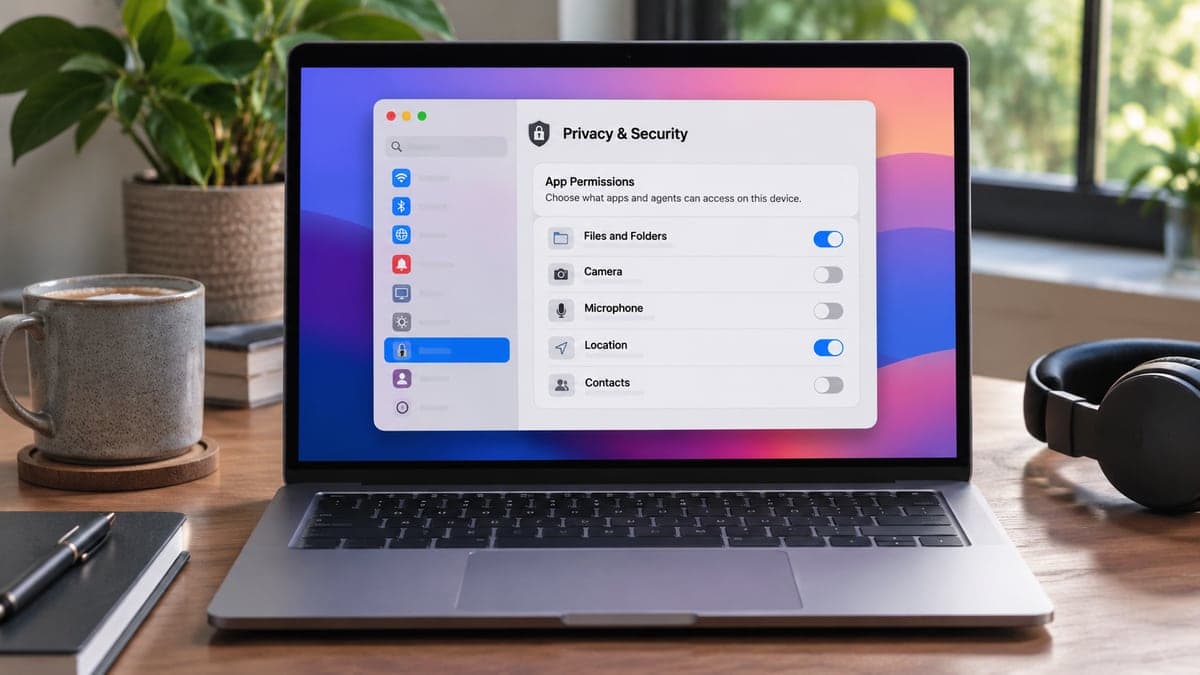
Apple has separated Device Control and Data Access into System & App Protection Override and a standalone Accessibility control, according to Help Net Security. People choose the requesting application from a list, while Apple’s guidance encourages limiting approval to the folders and programs needed for a particular task.
People can also require applications to ask each time they need access. A new indicator shows when one app controls another through System & App Protection Override, making an otherwise background activity visible in the menu bar.
Only fresh requests are subject to the revised process, according to Apple’s developer guidance as reported by Help Net Security. Access already granted will continue to work.
Stronger warnings for Full Disk Access
Full Disk Access now requires what Apple described as “very explicit” action, Engadget reported. Screenshots published by X user @madeby_ldt show a dialog telling people that macOS cannot safeguard their information against the application being approved.
The dialog describes powers to read, alter, remove and transfer personal information, alongside access to concealed or recently erased photos and the ability to see browsing activity, according to Engadget’s account of the screenshots. It said the controls apply to applications such as ChatGPT, Claude and Gemini, but do not prevent users from granting access.
Apple linked the change directly to autonomous software. The company said in October that agents’ growing capabilities and independence would substantially increase the dangers attached to such extensive access, according to Engadget. It added that it wanted users to understand the risks before granting access.
Why Apple is acting now
The issue gained attention in September after Inc. columnist Jason Aten said Meta’s Muse Mac app accessed his messages although he believed he had denied permission, Engadget reported. Meta said Aten must have granted access and described the feature as entirely opt-in.
Apple subsequently said some developer practices around Full Disk Access could leave personal content and web activity visible to applications while people lacked a complete grasp of the exposure, according to Engadget. TechCrunch reported on 16 November that the company had detailed permission controls, warnings and transparency features following its October announcement.
The risk is not limited to deliberate misuse by an application. An agent authorised to read, change and export information could cause wider harm if it performs an unintended action. Engadget also noted that Apple markets Mac Studio models for local AI models and agents, placing permission design closer to its product strategy.
These concerns extend beyond Apple. DailyTech.press has explained how chatbots learned to take action, while separate reporting examines Google’s confirmation of operational autonomous AI attacks.
Early criticism of the new indicator
The menu-bar reminder has drawn the strongest response from early testers on Reddit, according to Help Net Security. Several testers said it appears whenever an app uses system-level control and cannot be dismissed.
One Reddit user said the warning was justified but asked for a way to conceal it. The tester described the persistent alert as highly irritating for trusted utilities, including window-management software that had already received approval.
That response highlights a design tension: a persistent indicator can make control visible, but it may also frustrate people who deliberately approved utilities that operate continuously. Apple has not said in the supplied material whether it will add a dismissal option.
What developers and users should watch
Apple told developers to rework their setup processes and ensure software continues to function properly when people approve only selected folders or applications rather than blanket access, according to Help Net Security.
Backup software relying on Full Disk Access and assistive products relying on Accessibility may qualify for entitlements that retain the earlier behaviour on fresh installations. Apple said recognised applications keep working as before for now without such an entitlement, and it plans to provide more information about the process.
The controls remain in beta, and Apple has not announced a general-release date, Engadget reported. Users testing the release can review whether an agent needs an entire disk or only selected folders, while developers should watch for the promised entitlement guidance and any changes to the persistent indicator.