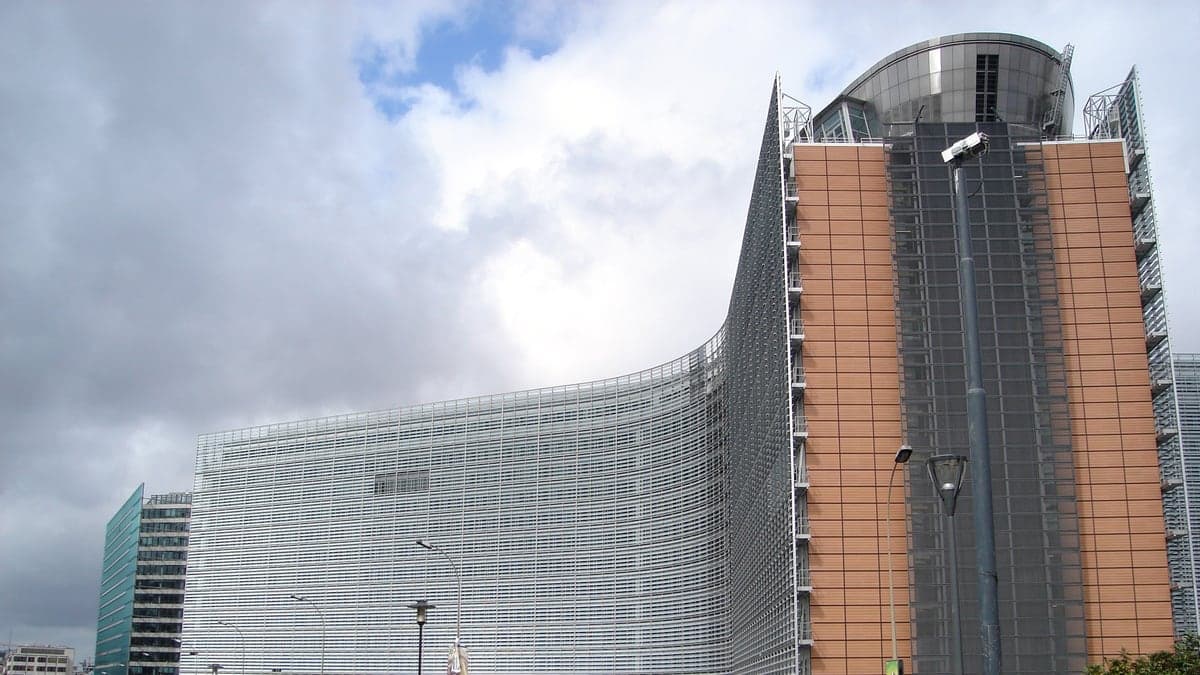
The European Commission confirmed on Thursday that a European Commission cyberattack detected last month disrupted internal personnel services, following reports that attackers used a publicly available AI tool.
The incident matters to EU staff whose workplace systems were affected and to public bodies assessing whether automated attack tools can shorten the time available to detect and contain intrusions. Investigators are still examining the campaign, and several central questions about data access and responsibility remain unanswered.
Commission spokesperson Thomas Regnier said the first signs were detected on 22 October, according to The Record. He called the incident an “AI-generated cyber campaign”, without naming either the software involved or what may have motivated those responsible.
A Commission spokesperson told Recorded Future News that officials had responded appropriately after detecting the campaign. Several services were taken offline as “a protective measure”, while affected individuals were notified.
What the European Commission cyberattack disrupted
The attack reportedly disrupted Commission personnel systems for more than 10 days, including payroll functions, leave requests, medical reimbursements and translation services, according to The Record.
The Register identified two affected applications as Sysper and MyPMO. Staff use Sysper to access payslips, submit timesheets and request vacation time, while MyPMO handles medical reimbursements.
Both applications returned earlier this week, although Sysper failed again on Wednesday, The Register reported. Translation services were also affected.
The disruption did not prevent salaries from arriving as usual, according to POLITICO reporting cited by The Register. Some staff could not book time off or submit timesheets.
The Commission said it was “preventively checking other systems” and remained in contact with CERT-EU and the European Data Protection Supervisor. Regnier said the investigation had produced no evidence that Commission staff were broadly affected by a data breach. He added that officials knew of no ransom demand.
That does not establish whether attackers accessed particular records. The Register said the Commission had not answered its questions about whether employee data was obtained or applications were taken offline solely as a precaution.
What reports say about ARTEX
POLITICO first reported the attack and said CERT-EU had connected the campaign to ARTEX, a freely available AI-based offensive security framework. The Commission itself did not name ARTEX when confirming the campaign.
ARTEX was released in July and draws on commercial AI models to find and exploit software weaknesses automatically, according to The Record. Its developer removed the project from GitHub in October following reports of malicious use, The Register reported, but several forks remained available.
CERT-EU warned on 5 November about suspected attacks using ARTEX against organisations within its remit, according to The Register. The reported use of the framework against EU institutions therefore preceded public confirmation of this European Commission cyberattack.
In its warning issued the previous week, the FBI said criminals and state-backed actors were making extensive use of ARTEX against government bodies and dozens of critical sectors around the world. The Record quoted its warning that some intrusions progressed from initial targeting to privileged access in under three hours.
Researchers had also found more than 1,600 ARTEX consoles exposed to the internet, according to the FBI warning cited by The Register. A related DailyTech.press report covers the FBI warning.
Why AI-assisted attacks concern government defenders
The reported automation matters because it can reduce the manual work between selecting a target and attempting to gain privileged access. It also puts internet-facing government systems under pressure from actors who may need less specialist skill.
Shaun Williams, a senior director at SentinelOne, said the significance extended beyond ARTEX itself. In his assessment, the broad availability of such AI-driven software enables attackers to identify and compromise weaknesses in internet-connected equipment more quickly and cheaply, with greater effectiveness and reduced expertise.
Snehal Antani, CEO of security firm Horizon3.ai, told The Register that such frameworks allow one actor to deploy agents that plan, probe, exploit and move laterally with little further human input after the initial goal is set.
Antani said shared tools could also complicate attribution because government-backed hackers and other cybercriminals increasingly use the same resources. That is a concern for investigators trying to distinguish between criminal and state-sponsored activity.
The incident also follows a June alert from the Five Eyes intelligence alliance, which anticipated fundamental changes to cyber offence and defence from AI. “The timeline is not years, it is months,” the alliance said at the time, according to The Record.
For readers following the wider technical response, another DailyTech.press article examines AI and cybersecurity.
Disclosure, investigation and what happens next
When journalists asked about the delayed disclosure, Regnier argued that making defensive activity public could weaken it. “There was no hiding whatsoever,” he said.
POLITICO’s sources, cited by The Register, said the Commission’s Corporate Management Board convened urgently earlier this month in response to the incident. Tech commissioner Henna Virkkunen briefed fellow commissioners on Wednesday.
The Commission has now disclosed three cyber incidents during this year, according to The Record. The earlier cases concerned Ivanti software in January and cloud infrastructure in March; officials have not established a connection between them.
Regnier said the investigation remains open. The immediate issues are whether any staff information was accessed, whether all affected services remain stable and what the continuing checks of other systems find. The Commission has not publicly identified the attackers or established their motivation.