Apple said on Tuesday 17 November that iCloud account access and sign-ins could be slow or disrupted, as users reported failures across the App Store and other services during an apple icloud outage.
The disruption matters because an Apple Account sits behind app downloads, subscriptions, payments and cloud data. A sign-in failure can therefore affect several tasks at once, even where Apple has not confirmed a separate fault with each service.
What Apple has confirmed
Apple's System Status page listed a problem with iCloud Account and Sign In, according to MacRumors. The notice said the service could be slow or experiencing issues.
MacRumors reported that no other outages were listed on Apple's status site at the time of its report. That distinction is important: Apple had acknowledged an account and sign-in problem, but had not confirmed every service named in social media posts.
9to5Mac reported that iCloud, the App Store and other Apple services were experiencing an apparent outage on 17 November. Its account described users reporting connection failures and trouble signing in.
The supplied reports do not include a statement explaining the cause. They also do not provide a start time, an estimated number of affected accounts or a timetable for full restoration.
Which services and regions are affected
The confirmed item is narrow: iCloud Account and Sign In. The reported impact is broader, covering services that depend on an Apple Account or an active connection to Apple's systems.
9to5Mac named iCloud and the App Store among the services drawing complaints. MacRumors said social media reports also referred to Apple Music, Apple Pay and Apple retail stores.
Those additional reports should not be treated as separate confirmations by Apple. MacRumors explicitly noted that Apple's status page did not list other outages alongside the iCloud sign-in notice.
Neither supplied report identifies particular countries, cities or a consistent regional pattern. The available evidence therefore supports reports of disruption from users, but not a conclusion that the problem is global or limited to one market.
Readers should also distinguish between a service being unavailable and an account being unable to authenticate. The second can produce errors in several apps without establishing that each app has its own independent outage.
Impact on sign-ins and purchases
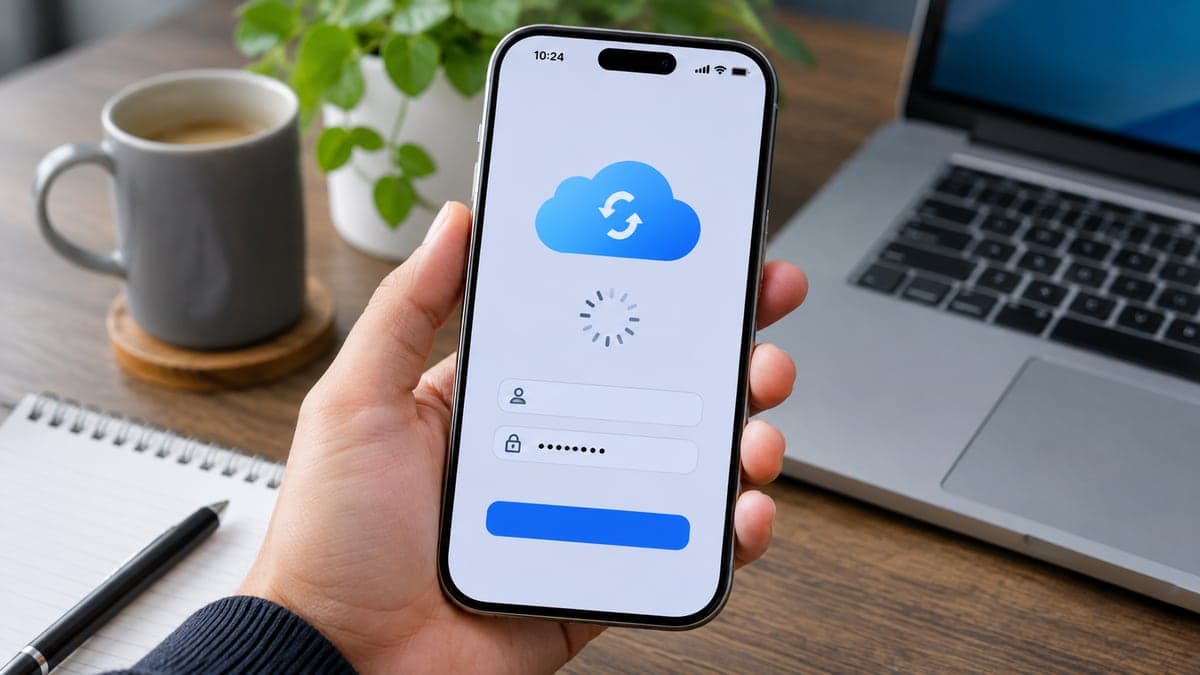
The clearest practical effect is difficulty signing in. MacRumors reported that users were unable to sign in to services associated with an Apple Account, while Apple acknowledged that iCloud account access could be slow or problematic.
That can interfere with downloading apps, updating installed software and reaching subscription services. App Store connection failures reported by users may prevent a purchase from starting or completing, but the sources do not establish whether payments were duplicated, charged incorrectly or lost.
Reports involving Apple Pay require the same caution. MacRumors attributed those reports to social media and did not say Apple had confirmed a payment-system outage. A failed sign-in or retail transaction should not automatically be read as evidence of a wider payments failure.
Customers who see a failed purchase can check the transaction in their account and their payment provider's records before trying again. That is a practical way to establish whether a charge appears, rather than assuming the result from an error message.
What the iCloud outage means for backups
iCloud sign-in problems can prevent access to account-dependent cloud features, but the supplied material does not confirm that backups were deleted, corrupted or stopped universally. It also does not say that devices lost locally stored data.
Users should avoid treating a synchronisation error as proof that a backup no longer exists. The reports provide no basis for claims about data loss, and Apple has not announced such an outcome.
A backup that cannot be checked during a service problem is different from a backup that has failed permanently. Once access returns, users can review the backup status and date on their device before making major changes.
DailyTech.press has separate guidance on protecting privacy on a smartphone and backing up business data. Those steps are general preparation, not evidence that this incident has damaged user data.
What remains unclear
The apple icloud outage reports leave several central questions unanswered. Apple has not supplied a cause in the available material, and there is no confirmed technical link between the status-page notice and every complaint about music, payments or retail systems.
There is also no verified regional map or count of affected users. Social media reports can show that people are encountering errors, but they cannot by themselves establish the scale or distribution of the disruption.
The next reliable indicator will be a change on Apple's System Status page or further information from the company. Until then, the firm conclusion is limited: Apple acknowledged iCloud Account and Sign In issues on 17 November, while reports described wider problems that remained unconfirmed individually.
Users with urgent purchases or account changes may need to wait for the status to change and then verify that transactions and backups completed. Repeated sign-in attempts are unlikely to clarify whether a wider service problem has been resolved.
The incident also shows why a single account system can have effects beyond email or storage. Authentication connects devices, storefronts and cloud features, so an account problem can look like several simultaneous failures even when the public status notice names only one component.