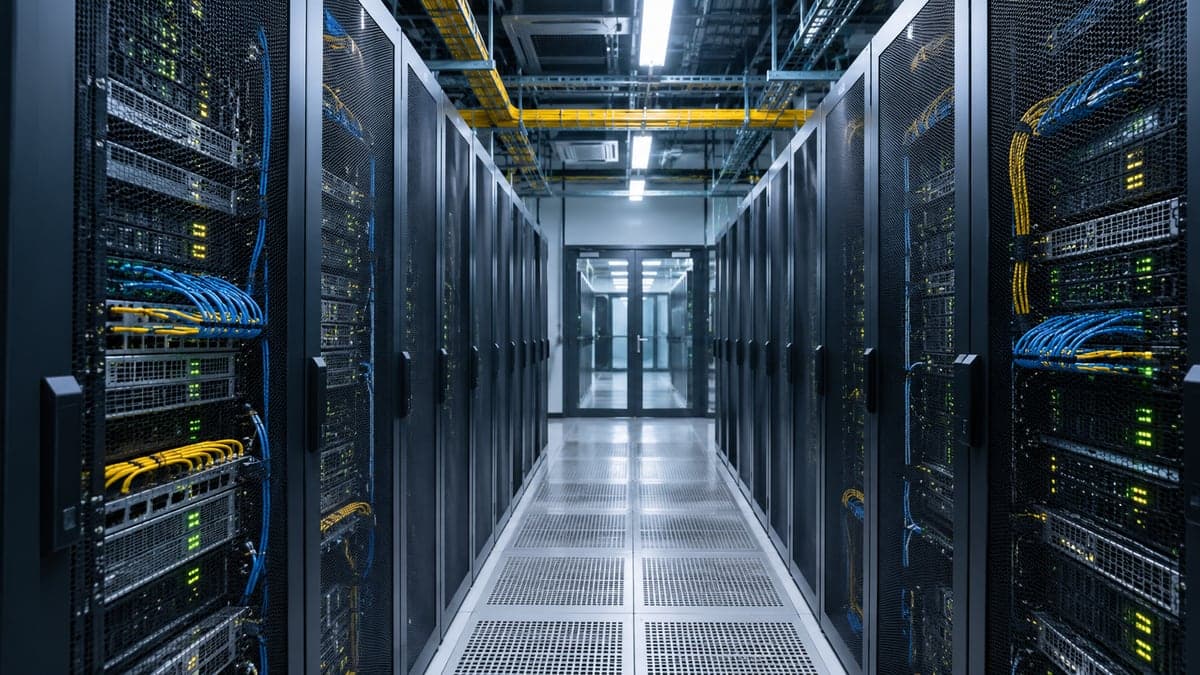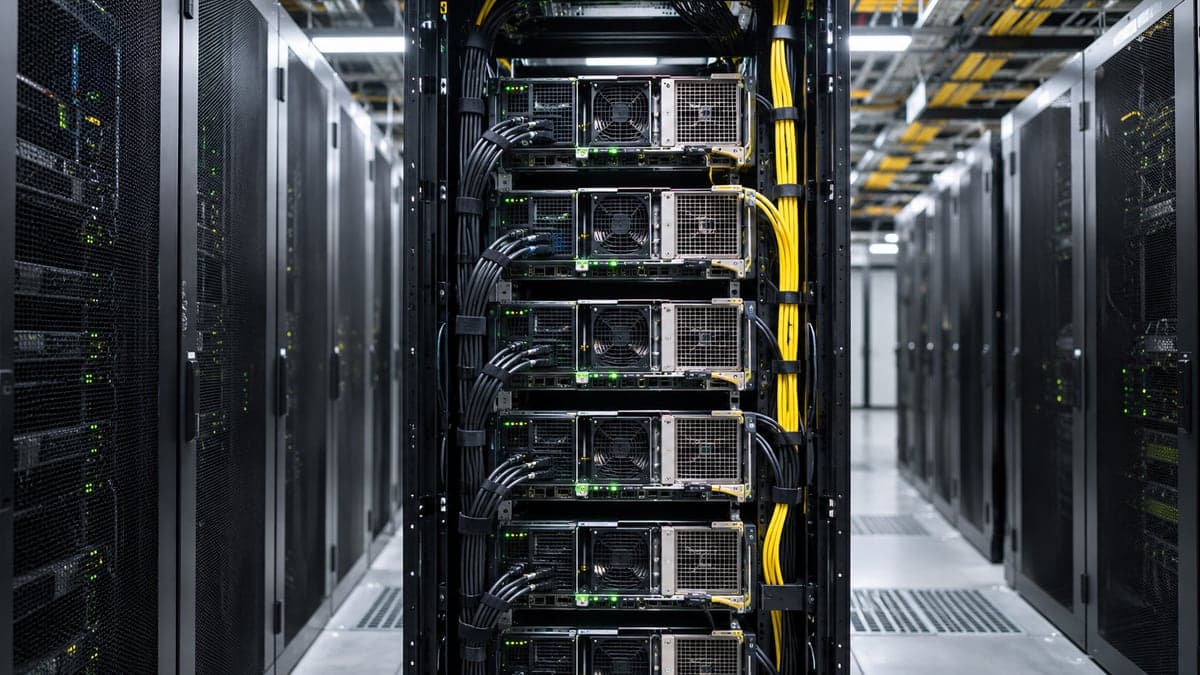
The US Commerce Department announced an interim final rule on 16 November restricting remote access to advanced GPUs and servers in five countries. The cloud GPU export rules target customers accessing American computing technology without importing hardware.
The change matters to cloud providers, data-centre investors and AI companies that rent computing capacity abroad. It also places new compliance demands on businesses operating in Indonesia, Malaysia, Singapore, Thailand and Brazil, all of which have sought economic benefits from AI infrastructure investment.
What the cloud GPU export rules change
The Bureau of Industry and Security, working with the Department of the Treasury and the National Security Council, said the rule was intended to stop restrictions on sensitive American technology being circumvented through remote computing arrangements in third countries, according to Tom’s Hardware.
The Register reported that the rule bans remote access to certain GPUs and servers running in data centres in the five named countries. It also requires a licence before selling sufficiently powerful chips and servers into those markets when the equipment could train or run advanced models.
The requirements are due to take effect in 90 days, Tom’s Hardware reported. Restrictions will also apply to data centres supplying remote access to companies headquartered in higher-risk countries, including China, Russia and Iran.
The measures do not cover equipment supporting recommendation tools for online shopping or social media. The interim final rule says those functions do not present the same national security threat, according to The Register.
Why remote GPU rentals became a workaround
Washington introduced regulations between 2021 and 2024 requiring US-based cloud providers to ensure they did not serve Chinese customers covered by the restrictions, The Register reported. Equivalent obligations did not apply to cloud operators elsewhere.
That difference left overseas computing rentals available as an alternative to physical GPU imports. Data-centre construction in Malaysia and Thailand has widely been viewed as partly serving customers seeking computing capacity they could not import into China, according to the same report.
Tom’s Hardware reported that Nvidia told data-centre operators earlier in November to limit remote access, requiring 51% of their business to come from non-Chinese companies. The outlet said the effectiveness of that approach remained unclear.
The new government requirements therefore move beyond restrictions on the physical shipment of processors. They place the location, ownership and end use of computing capacity under closer examination.
How providers must identify end users
Counterpoint research vice-president Neil Shah said responsibility for complying with export controls would move away from chip makers and towards businesses supplying cloud services.
Shah told The Register by email that facilities in Singapore, Malaysia and Indonesia would face extensive obligations to understand their customers’ workloads. He compared the obligations with know-your-customer rules applied to financial services companies.
Shah said operators would have to demonstrate that computing capacity was not reaching embargoed countries or put their own supplies of US chips at risk.
That assessment indicates that checking a contracting customer’s name alone may not address the regulatory risk. Providers may need evidence about headquarters, beneficial control, remote users and the workloads running on their systems, although the source reports do not set out a complete operational checklist.
For AI companies renting GPU capacity abroad, the practical effect is likely to be more documentation and greater scrutiny of where developers and users are based. Businesses with links to higher-risk jurisdictions could face refused service or licensing requirements, while providers may need to separate affected capacity from other commercial workloads.
The reports do not establish that every overseas AI rental will be prohibited. The scope depends on the hardware, customer, location and remote-access arrangement covered by the rule.
Impact on Asian and Brazilian data centres
The five countries have taken different approaches to AI infrastructure growth. Singapore limits data-centre construction, while Malaysia has introduced stricter building codes and requirements intended to reduce energy and water consumption, according to The Register.
Thailand recently required large new data centres to be built in designated industrial zones. Indonesia has strong regulations but is not currently a major data-centre hub, the report said.
Brazil requires operators to reserve at least 10% of capacity for local users. The Register said this points to some facilities prioritising customers based outside the country.
Whether the US measures slow construction remains uncertain. Operators could seek regional hosting business from companies such as Amazon or Meta, but the exemption for recommender systems does not provide a general exemption for advanced AI training.
What the rules mean for US-China decoupling
Shah said Chinese technology groups could experience serious near-term constraints on computing capacity. Over a longer period, he expects the restrictions to accelerate the separation of the two countries’ technology sectors.
In his assessment, the US measures will encourage greater Chinese investment and engineering effort in domestically controlled technology stacks, including Huawei’s Ascend ecosystem.
That is an analyst’s assessment rather than a confirmed outcome. Restricting overseas rentals could reduce near-term access to US-designed computing, but it could also strengthen Chinese incentives to fund domestic chips, servers and software.
Alibaba had announced its plan to separate the T-Head semiconductor business shortly before Shah made his comments. Alibaba described the unit as supplying complete data-centre chip systems for computing infrastructure in China, according to The Register.
The broader context is a shift from controlling individual chip shipments towards controlling access to computing services. For cloud businesses, compliance increasingly involves understanding what cloud computing infrastructure provides and who ultimately uses it. The rules also add a geopolitical dimension to questions about sovereign cloud infrastructure.
Investigation and company response
The US Departments of Commerce and Justice confirmed late on 16 November that a criminal investigation into Nvidia-linked Megaspeed was ongoing, The Register reported in an update. The departments detailed investigative activities during 2024 and 2025 and said the information addressed inaccurate public reporting.
Singaporean authorities confirmed that a June meeting with Alice Huang took place. They said American agencies provided little assistance after Singapore requested support for its investigations, according to the report.
Singaporean investigators also examined whether Supermicro had any involvement with Megaspeed and said the server maker did not cooperate. Supermicro told The Register that it has no business dealings with the entities concerned and maintains a robust compliance programme.
The company said it complies with applicable US export and re-export controls and imposes the same requirement on its distributors and resellers.
The next test will come when the requirements take effect in 90 days. Cloud customers and operators will be watching for licensing practice, enforcement and evidence that overseas capacity can remain available without providing a route around hardware export controls.