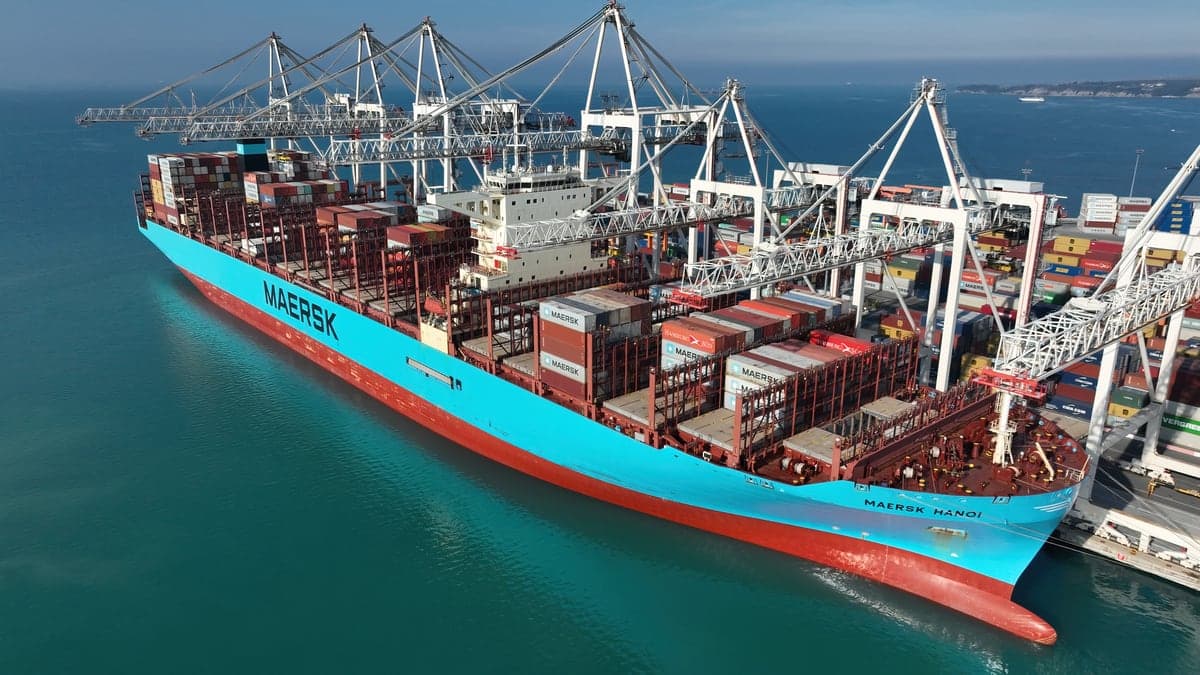
The Maersk data breach disclosed on November 11 involves an old system the shipping and logistics group inherited through an earlier acquisition, not its core shipping platforms. Maersk says an attacker accessed the system and extracted data, but that findings so far suggest no sensitive data was disclosed and customers should see no disruption. A ransomware group calling itself WhiteArmor claims a much larger haul and is demanding $5 million.
What Maersk has confirmed
According to the company's statement, as reported by BleepingComputer and Security Affairs, Maersk identified an IT security incident involving unauthorised access to, and data extraction from, a local legacy system that came with a previous acquisition. It says:
- the incident is isolated to that one system;
- it has found no impact on other Maersk systems, or on customer and partner connections such as APIs and EDI links;
- its findings so far strongly suggest that no sensitive data has been disclosed;
- it does not expect operational disruption, and customers can keep booking and managing shipments as normal.
Maersk has not said which system was affected, what kinds of data were taken or when the intrusion began. It says it will notify customers as it learns more, and it has warned them to verify unexpected messages through their usual Maersk contact, a sensible precaution because breaches are often followed by phishing that exploits the news.
What WhiteArmor claims
WhiteArmor listed Maersk on its Tor leak site the weekend before the statement. The group says it took around 100 GB from the "OCF/LF Logistics" platform and wants $5 million in bitcoin within 30 days. Its claimed haul includes nearly 30,000 driver records, plaintext passwords, 33 super-administrator accounts, signed delivery receipts, purchase orders and shipping notices, and more than 27,000 mobile device logs with phone numbers, email addresses and IMEI numbers.
None of this has been independently verified, and Maersk's statement does not confirm it. Ransomware groups routinely exaggerate to increase pressure, so the gap between the two accounts is not surprising. It is also worth noting that Maersk's wording, "no sensitive data", is a judgement about the data, not a denial that data left the building.
The weakest system in a company is often one nobody chose: it simply arrived with the last acquisition and never quite got integrated.
The LF Logistics connection
Maersk has not named the system. Reporting connects it to LF Logistics, the contract-logistics business Maersk acquired from the Li & Fung group in 2022, because the attackers name its platform and the timing fits Maersk's reference to an inherited system. Treat that link as likely but unconfirmed.
Maersk knows the cost of a cyber incident better than most. In 2017 the NotPetya malware forced it to reinstall thousands of servers and tens of thousands of PCs, with damages reported at up to $300 million. By the company's own account, the Maersk data breach looks very different: contained to one system, with no operational impact.
Why inherited systems are a soft target
Mergers and acquisitions create precisely the conditions attackers like. Acquired companies often bring their own identity systems, old applications, shared administrator accounts and integrations with partners. They may sit outside the parent's monitoring for months or years while integration plans are worked out. If the attackers' claim of plaintext passwords and super-admin accounts proves accurate, it would fit that pattern of a system built to an older standard.
This kind of extortion, where data is stolen and threatened with publication rather than encrypted, is now the dominant model, as we explained in our report on the new wave of cyber attacks. Backups do not help when the threat is a leak.
What businesses should take from it
For security teams, especially in groups that grow through acquisition:
- Inventory acquired systems early and treat them as untrusted until assessed, segmented and brought under central monitoring.
- Kill shared and legacy admin accounts, enforce strong, phishing-resistant authentication and check how passwords are stored.
- Decommission what you do not need. Every legacy platform kept alive "just in case" is attack surface.
- Watch for data leaving, not just for malware, on systems that hold partner and driver data.
- Prepare customer comms in advance, including warnings about follow-on phishing.
For Maersk customers and partners, the practical steps are simple: be wary of unexpected emails or calls referring to the incident, verify payment or account changes through known contacts, and change any credentials you may have shared with LF Logistics-era systems. Our guide to passkeys for business explains why moving away from reusable passwords limits the damage when a supplier is breached.