The password has had a long and undeserved retirement party. For years, the industry has declared its death while continuing to depend on it for almost everything. That era should now end. Passkeys for business and consumer accounts alike are mature, widely supported and demonstrably more secure. The remaining obstacle is not technology. It is inertia.
Every organisation that runs a login page, which is to say nearly every organisation, needs a plan to move beyond passwords. Not a vague aspiration, but a plan with owners and dates.
Why passwords cannot be saved
The core problem with passwords is structural. A password is a shared secret: you know it, and the service you log into has to verify it. That means it can be guessed, reused across sites, stolen from a breached database, captured by malware or simply typed into a convincing fake website.
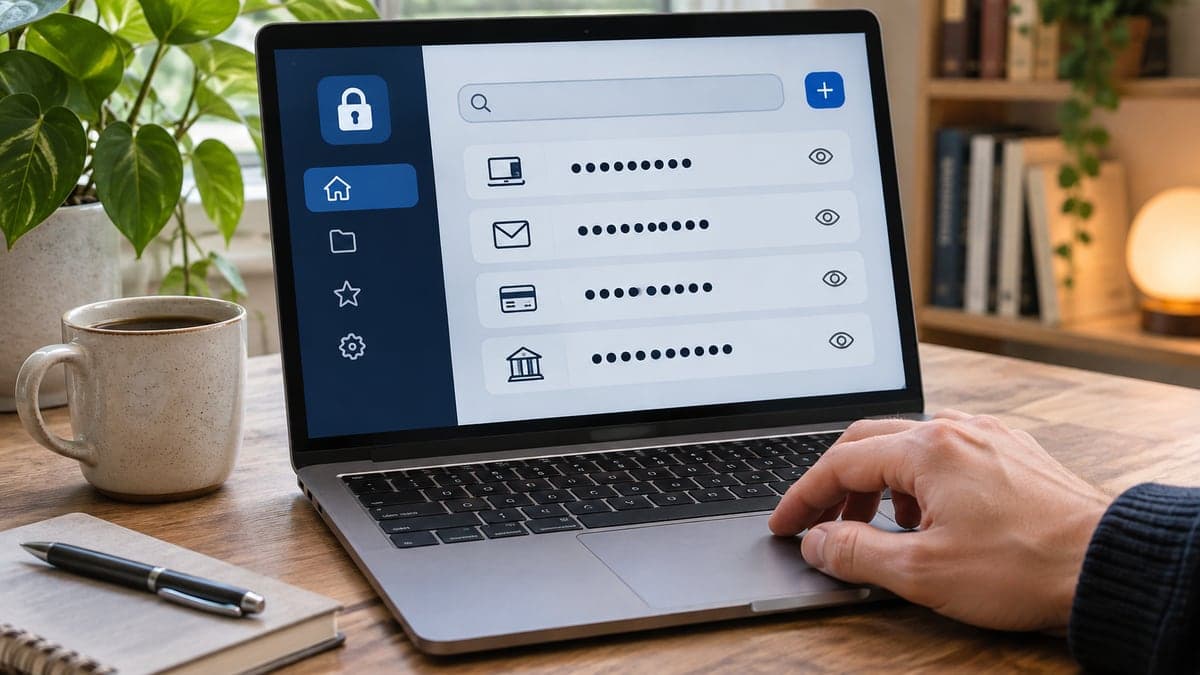
We have tried to patch these weaknesses for decades. Complexity rules produced passwords that were hard to remember and easy to crack. Forced periodic changes, which NIST's digital identity guidelines have recommended against for years, led to predictable variations. Password managers help enormously, but only for the people who use them well. Security awareness training has its value, yet it asks humans to be perfect in a contest where attackers, increasingly armed with AI, need only one success.
We have spent thirty years asking people to be better at passwords. The honest conclusion is that the password is the problem, not the people.
Multi-factor authentication was a vital step, and every organisation should have it. But many common forms of MFA, including SMS codes and simple push notifications, can still be phished, intercepted or worn down by persistent attackers. Adding factors to a broken foundation improves the odds without fixing the design.
What makes passkeys different
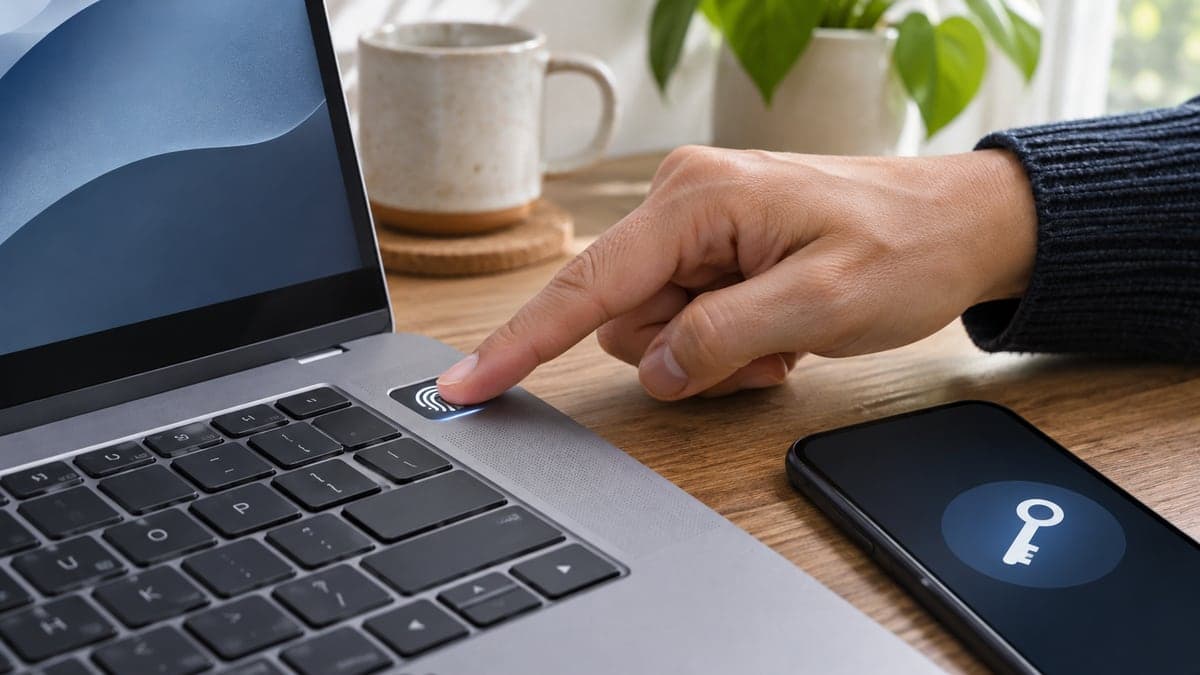
Passkeys, built on the FIDO2 and WebAuthn standards developed by the FIDO Alliance and the W3C, replace the shared secret with public-key cryptography. When you create a passkey, your device generates a pair of keys. The public key goes to the service. The private key stays protected on your device or in your platform's encrypted credential manager, unlocked with a fingerprint, face scan or device PIN.
When you log in, the service sends a challenge that only your private key can sign. Nothing secret crosses the network, and there is nothing useful to steal from the server.
The decisive feature is that a passkey is bound to the genuine website or app it was created for. If a user lands on a perfect replica of their bank's login page at a slightly different address, their device simply will not offer the passkey. Phishing, the most successful attack technique of the internet age, loses its main weapon.
Usability matters as much: passkeys are typically faster than a password plus a one-time code, with nothing to remember, rotate or reuse.
The excuses are running out
In May 2022, Apple, Google and Microsoft jointly committed to expanding support for the FIDO standard across their platforms. Since then, passkey support has arrived across major operating systems, browsers and password managers, and passkeys can sync securely across a user's devices. Large consumer services have rolled them out to their users. The technology is no longer experimental.
The objections that remain are real but solvable:
- Account recovery. If a user loses every device, how do they get back in? This is a genuine design challenge, and weak recovery processes can undermine strong authentication. But it is a reason to design recovery carefully, not to keep passwords.
- Legacy systems. Some internal applications cannot support modern authentication. Identity providers and single sign-on can often bridge the gap while those systems are modernised or retired.
- Shared and managed devices. Frontline workers on shared terminals may need hardware security keys rather than synced passkeys.
- User education. People need to understand what a passkey is. Clear prompts and good defaults go a long way.
The barrier to passkeys is no longer technology. It is the will to make the change and the discipline to finish it.
Passkeys for business: what a plan looks like
A credible plan does not require ripping out passwords overnight. It requires direction:
- Start with the highest-risk accounts. Administrators, finance staff and executives should move to phishing-resistant authentication first, using passkeys or hardware security keys.
- Offer passkeys to customers as a default option at sign-up and login, and make the benefits obvious.
- Fix recovery. Make account recovery at least as strong as the login it protects, with particular care at the help desk.
- Set retirement milestones. Decide when passwords become optional, and eventually when they are removed for groups that have migrated.
- Measure adoption. Track the share of logins using passkeys and treat it as a security metric reported to leadership.
The cost of waiting
Every month an organisation relies on passwords is another month of exposure to credential stuffing, phishing and account takeover. These are not exotic threats; they are among the most common causes of breaches.
Passkeys will not solve every security problem. Session theft, malware on devices and social engineering of help-desk and support staff remain real. But removing the phishable secret at the front door changes the economics of attack in a way few other single measures can.
The password served us longer than it should have. The responsible thing now is to give it a proper send-off, with a plan, a deadline and the determination to see it through.