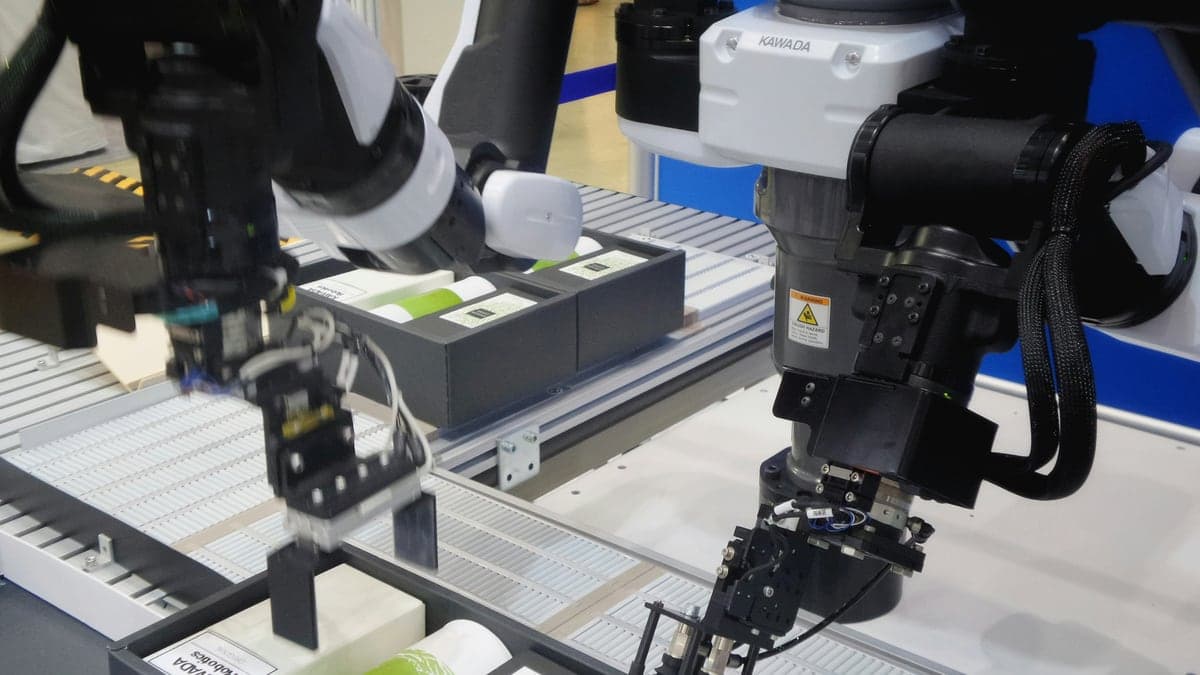
ASUS has unveiled its first humanoid robot, called Gallop, and it is starting with one of the fiddliest jobs on a PC production line. The two-armed ASUS humanoid robot is learning to pack motherboard accessories at an ASUS group factory, with a target of 99.5% success at human pace. ASUS plans customer pilots in 2027 and a market launch in the second half of 2028.
What the ASUS humanoid robot does
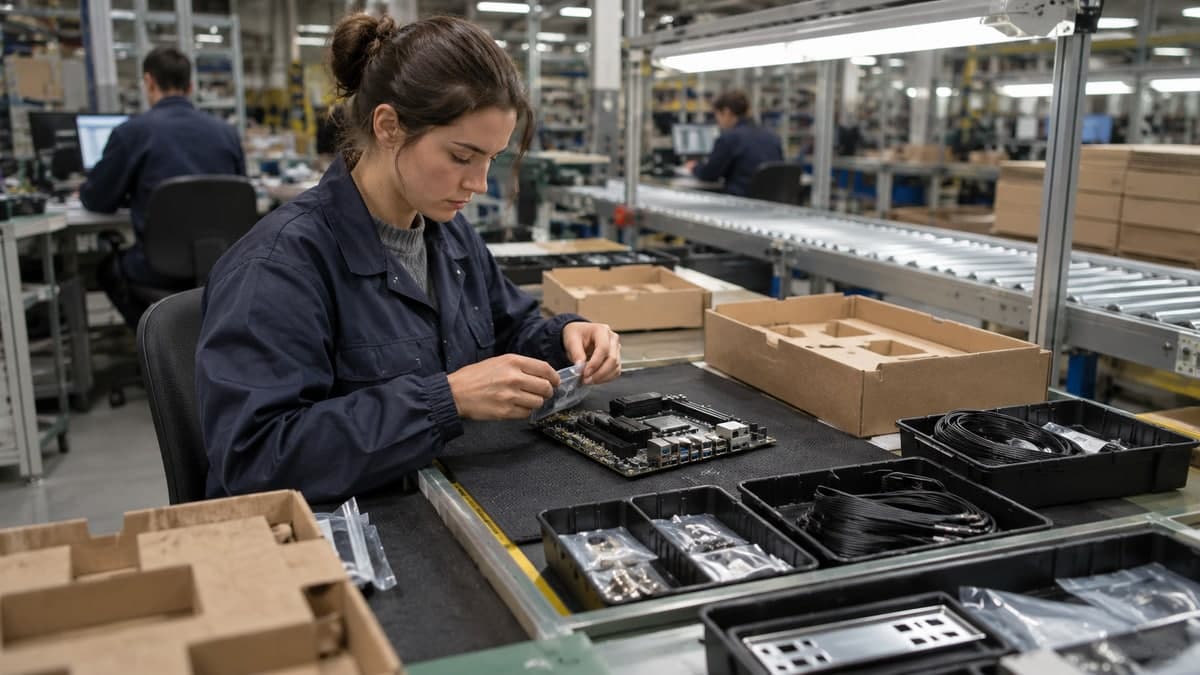
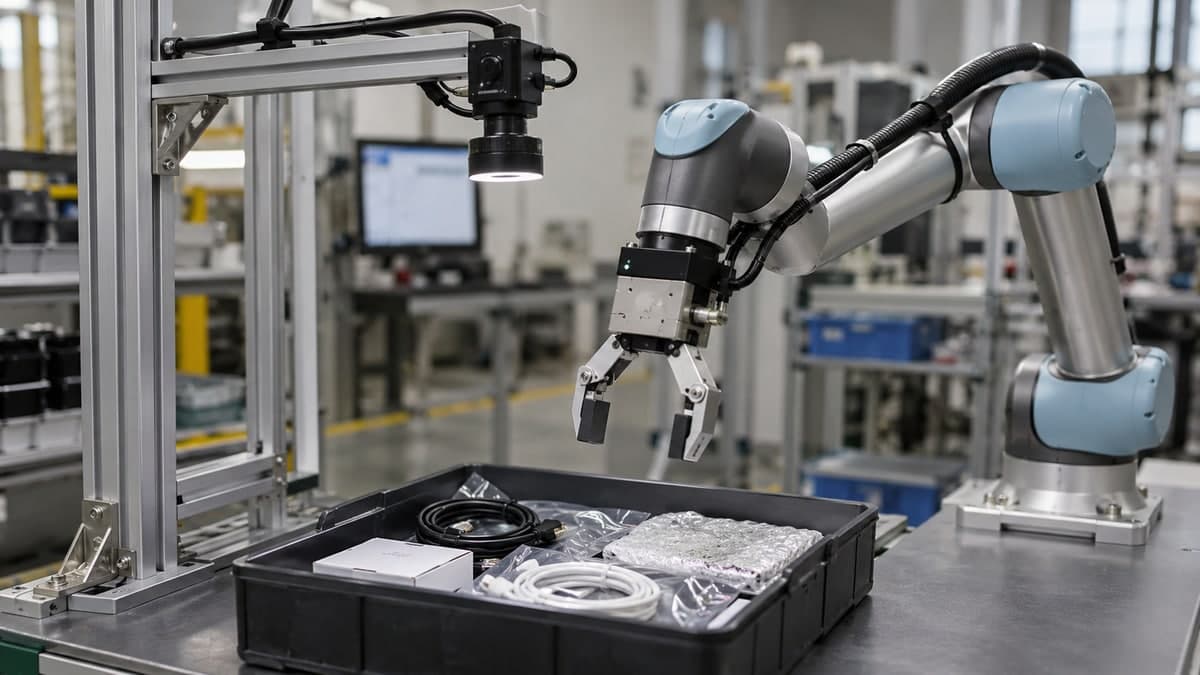
The details come from an ASUS blog post by Dr. Albert Chang, dated November 13, and coverage by Humanoids Daily and Interesting Engineering. Gallop's first job is at a packing station in an ASUS group electronics manufacturing factory. Each motherboard box needs 15 accessories, many of them small, thin parts sealed in clear plastic bags, and a board passes roughly every 20 seconds.
That is a hard problem for automation. Conventional industrial grippers handle rigid, predictable objects well, but soft bags and tiny screws that shift around are another matter. ASUS has set Gallop a target of 99.5% task success within the 20-second window, which the company presents as the same standard it expects from human workers.
It is important to read that figure correctly. It is a goal, not a result. ASUS has not published a measured success rate for the robot.
How Gallop learns
ASUS is not training its own foundation model from scratch. According to the company, Gallop starts from leading open AI models and is taught through four kinds of data:
- Worker demonstrations: experienced staff wear head-mounted cameras, with their consent, to record how they do the job.
- Simulation: each demonstration is varied in software to create many more examples.
- Teleoperation: operators guide the robot in VR using a headset and gloves, at a station built with the same parts and cameras as the real one.
- Deployment data: what the robot experiences on the line feeds back into training.
The software has four layers: a planner, a supervisor model that checks each step and re-plans when something goes wrong, a skills layer for reaching, grasping and placing, and a low-level control layer. Fixed interfaces between the layers are meant to let ASUS swap in newer AI models without rebuilding the robot. Everything runs on a single Nvidia Jetson AGX Thor computer mounted inside it.
The interesting part is not the body. It is the plan to treat AI models as replaceable parts, upgraded every few months like software on a laptop.
The hardware, and what is missing
The current Gallop has a fixed base and two arms. ASUS says it designs the body and a dexterous, touch-sensing hand in-house, and sources standard components such as motors from partners. Over the next year it plans to fit its own hand, add wheels and show the robot to customers at Computex 2027 in Taipei.
Plenty remains undisclosed. Humanoids Daily notes that ASUS has not given Gallop's height, weight, degrees of freedom, payload, battery life or price. Without those figures it is impossible to compare Gallop with established humanoid and mobile manipulator platforms.
Why a PC maker is building robots
The logic is clearer than it first appears. ASUS already builds the computers, boards and edge AI systems that robots need, and it owns factories full of repetitive tasks to test them on. Starting with its own production line gives it real data and a captive first customer before it sells to anyone else. ASUS says electronics manufacturing comes first, with hospitals and service settings possible later.
ASUS also frames Gallop as a tool for workers rather than a replacement. Interesting Engineering reports the company saying the robot should take on repetitive, physically demanding work, while staff who train it could move into setup and supervision roles. Whether that holds at scale is a fair question for any factory automation project.
Gallop is part of a broader shift toward what the industry calls physical AI, in which the reasoning models behind chatbots are adapted to act in the real world. We have covered the same trend in autonomous AI systems and AI-powered drones.
What to watch
The next milestones are concrete:
- A measured success rate on the packing line, compared against the 99.5% target.
- The in-house hand and wheeled base, promised within a year.
- Computex 2027, where ASUS plans to show the robot to customers.
- Partner pilots in 2027 and pricing ahead of the planned 2028 launch.
The ASUS humanoid robot is still early, and most of its numbers are targets. But a consumer electronics giant testing a robot on its own line, with a clear task and a public benchmark, is a more useful signal than another staged demo. It joins other new hardware arriving this month, from Android XR glasses to satellite links for phones.