For years, the smartest thing about your phone happened somewhere else. Ask a voice assistant a question, and your audio travelled to a data centre for processing. Edit a photo with an AI feature, and the heavy lifting usually happened in the cloud. That architecture is shifting towards on-device AI. The latest phones and laptops are being designed around a simple idea: more of the intelligence should live on the device itself.
Meet the NPU
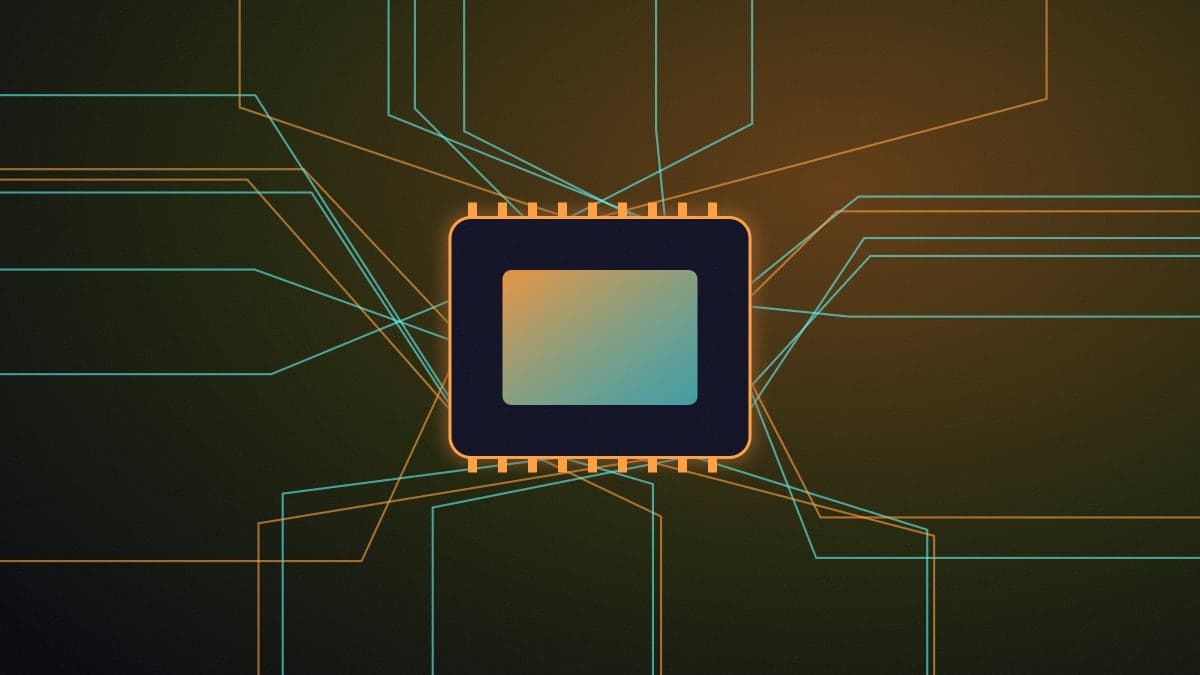
The enabling hardware is the neural processing unit, or NPU. Where a CPU is a generalist and a GPU excels at large parallel workloads, an NPU is built specifically for the matrix arithmetic at the heart of neural networks, and for doing it with very little power.
Phones got there first. Apple introduced its Neural Engine with the A11 chip in 2017, and Qualcomm, Google, Samsung and MediaTek have all built increasingly capable AI accelerators into their mobile chips. PCs are catching up fast. In 2024 Microsoft launched its Copilot+ PC category, setting a requirement for an NPU capable of more than 40 trillion operations per second, a figure usually quoted as TOPS. Qualcomm, Intel and AMD now all ship laptop chips with NPUs aimed at that bar, and Apple's M-series Macs include their own Neural Engine.
AI capability is becoming a baseline expectation rather than a premium extra.
The case for on-device AI
Running AI on the device rather than in the cloud has three main attractions.
- Privacy. Data that never leaves the device cannot be intercepted in transit, logged on a server or exposed in a provider's breach. For personal photos, messages, health information and business documents, that is a meaningful difference.
- Latency. Local processing avoids a round trip to a data centre, which matters for real-time tasks such as live transcription, translation, camera effects and noise suppression on calls.
- Availability. Features keep working on a train, on a plane or in a basement with no signal.
There is an economic logic too. Every cloud AI query costs the provider compute and electricity, a growing strain on data centres and power grids; shifting routine work onto hardware customers already own is attractive.
The cheapest, most private data centre is the one already in your pocket. Device makers have finally noticed.
The battery question
NPUs are pitched as battery savers, and for the right workloads they are. A task such as blurring a video background or transcribing audio can run on an NPU using a fraction of the power the CPU or GPU would need. That frees the main processor and can extend battery life during calls and meetings.
The caveat is that running larger generative models locally is still demanding. Generating text or images on-device consumes memory and energy, and heavy use will drain a battery faster than light browsing. Memory is the hidden constraint: local language models need RAM, which is why device makers have been raising baseline memory on AI-focused products. A device with a capable NPU but limited memory may struggle with the more ambitious features.
Hybrid by design, private by effort
On-device models are, necessarily, much smaller than the frontier models running in data centres. They are good at focused tasks, such as summarising a notification, rewriting a sentence, recognising objects in photos or transcribing speech, but they cannot match the breadth and reasoning of large cloud models.
So the emerging architecture is hybrid. The device handles what it can locally and hands harder requests to the cloud. How that hand-off is done becomes a critical privacy question. Apple's approach, announced in 2024 alongside Apple Intelligence, routes more complex requests to what it calls Private Cloud Compute, servers built on its own silicon with a design intended to prevent data retention and to allow independent researchers to inspect the software. Google pairs its on-device Gemini Nano model with cloud-based Gemini models. Other vendors take their own approaches.
On-device AI does not end the privacy debate. It moves the important question to the moment your device decides it needs help.
Local processing reduces some risks and introduces others. Microsoft's Recall feature, which captures periodic snapshots of a PC's screen to make past activity searchable, drew strong criticism from security researchers when it was first announced in 2024. Microsoft delayed it, made it opt-in and added encryption and authentication protections. The episode was a useful reminder: data that stays on the device is still data, and an AI index of everything a user has seen is a valuable target for malware and for anyone with physical access, a small example of how AI is becoming a new attack surface.
For businesses, the governance questions are familiar: which features are enabled on managed devices, where the data is stored, and whether sensitive information can still reach the cloud without the user realising.
What to look for
If you are buying a phone or laptop with AI in mind, a few practical tips:
- Look past the TOPS figure; the software that uses the NPU matters more than the raw number.
- Check the memory; it often determines which AI features a device can run well.
- Find out which features run locally and which require the cloud or a subscription.
- For business fleets, confirm that AI features can be managed centrally by IT.
The PC and phone are being rebuilt around AI. Done well, that could make devices more personal, more responsive and more private. Done carelessly, it creates new stores of sensitive data on the most-stolen objects we own.