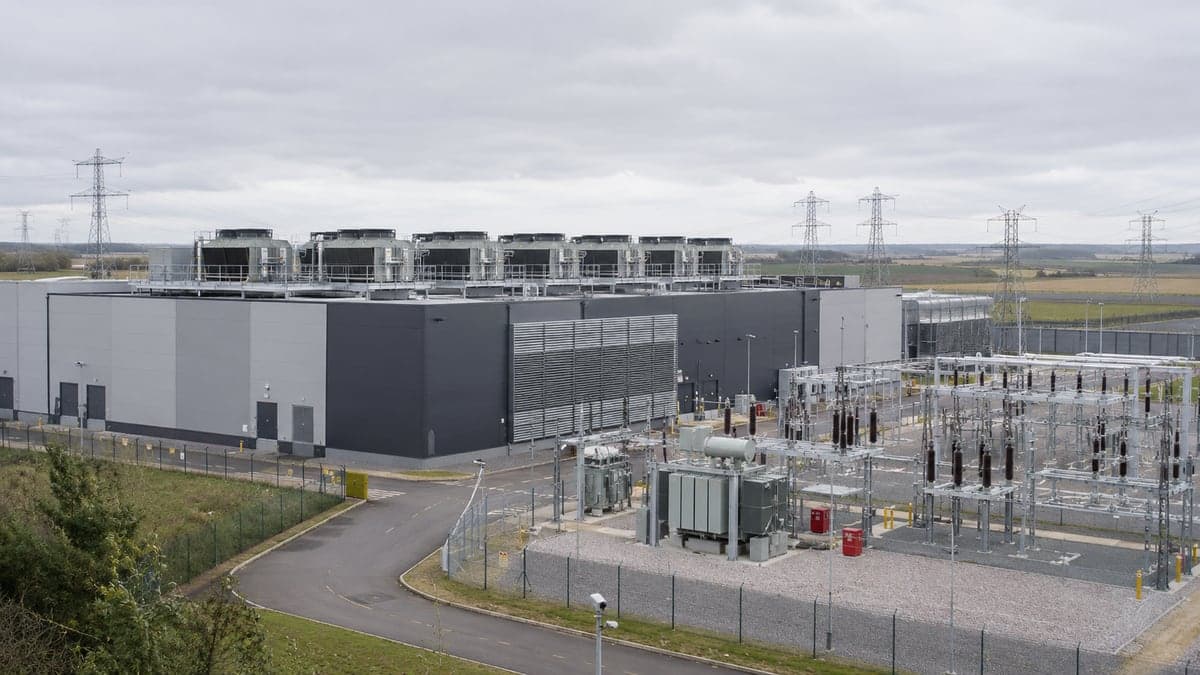
Artificial intelligence is often described as if it lives in the ether. It does not. It lives in buildings filled with specialised chips, and those chips need enormous amounts of electricity to run and to keep cool. As AI has scaled from research labs into everyday products, AI energy consumption has moved from a footnote to one of the defining questions for the technology, the climate and the grid.
How big is AI's energy problem?
Data centres have long been significant energy users, but for years efficiency improvements helped keep their total consumption relatively contained, even as computing demand grew. AI is changing that trajectory. Training a large model requires thousands of high-power accelerators running for weeks or months. Serving that model to millions of users, a process known as inference, adds a continuous load that grows with every new feature and customer.
The International Energy Agency, in its 2025 analysis of energy and AI, estimated that data centres used around 1.5 percent of global electricity in 2024 and projected that their consumption could roughly double by 2030, with AI as the main driver. Projections in this field vary widely, and depend heavily on assumptions about chip efficiency, adoption and how many planned facilities are actually built. But the direction is not in dispute.
What makes the issue acute is concentration. Data centres cluster in specific places with good connectivity, land and power. In Ireland, data centres already account for around a fifth of metered electricity consumption, and the grid operator has restricted new connections in the Dublin area. Similar pressures have emerged in the Netherlands, Northern Virginia and other hubs.
AI's constraint is no longer just chips. It is the cable from the power station to the building.
The grid is the bottleneck
It is tempting to think the problem is generation, and that building more wind farms or gas plants solves it. Often the harder issue is the grid. Connecting a large new data centre can require new substations and high-voltage lines, and in many countries the queue for grid connections stretches years into the future. Planning and permitting add further delay.
A data centre can be built in a couple of years; major transmission infrastructure can take a decade. Developers are responding by seeking sites where power is already available, building on-site generation, or locating facilities near existing power plants.
The nuclear bet
The most striking response has been a turn towards nuclear energy, which offers large amounts of steady, low-carbon power. In 2024, several of the largest technology companies announced nuclear agreements:
- Microsoft signed a long-term power purchase agreement with Constellation Energy that would allow the restart of a reactor at the Three Mile Island site in Pennsylvania, shut down in 2019 for economic reasons.
- Google agreed to buy power from small modular reactors to be developed by Kairos Power, with the first targeted around the end of the decade.
- Amazon announced investment in X-energy, another small modular reactor developer, alongside agreements with utilities.
Small modular reactors, or SMRs, promise factory-built units that are quicker and cheaper to deploy than conventional plants. They remain largely unproven at commercial scale, and nuclear projects have a long history of delays and cost overruns. These deals are best understood as long-term bets that will not ease near-term demand.
Nuclear deals make headlines in a week. Reactors take years. The gap between the two is where the hard choices sit.
In the meantime, much of the additional demand is likely to be met by whatever generation is available, including natural gas. That creates real tension with the climate commitments many technology companies have made.
The efficiency counter-argument
There are serious reasons for optimism. Each generation of AI chips typically delivers more computation per unit of energy. Cooling technology is advancing, with liquid cooling increasingly used for dense AI racks. Data-centre operators measure efficiency through power usage effectiveness, or PUE, and leading facilities operate close to the theoretical ideal.
Software matters too. Smaller, distilled models can handle many tasks that once needed giant ones. Techniques such as quantisation reduce the computation needed per query. Running some AI on the NPUs in phones and laptops shifts load away from data centres altogether.
The catch is an old one in energy economics: when something becomes more efficient and cheaper, people tend to use more of it. Efficiency gains in AI have so far been absorbed by soaring demand rather than reducing total AI energy consumption.
What Europe should watch
For Europe, the AI power question intersects with energy security, climate targets and Europe's push for digital sovereignty. A few issues stand out:
- Grid investment. Faster permitting and expansion of transmission networks benefit data centres and the wider energy transition alike.
- Transparency. The revised EU Energy Efficiency Directive introduced reporting requirements for data centres, a useful foundation for better data.
- Heat reuse. Waste heat from data centres can feed district heating networks, as already happens in parts of the Nordics.
- Location. Siting facilities where clean power is abundant, rather than where it is scarce, reduces strain on congested grids.
AI's power problem is not a reason to abandon the technology. It is a reminder that digital progress is physical. The countries and companies that treat electricity as a strategic input, not an afterthought, will be the ones best placed to benefit.