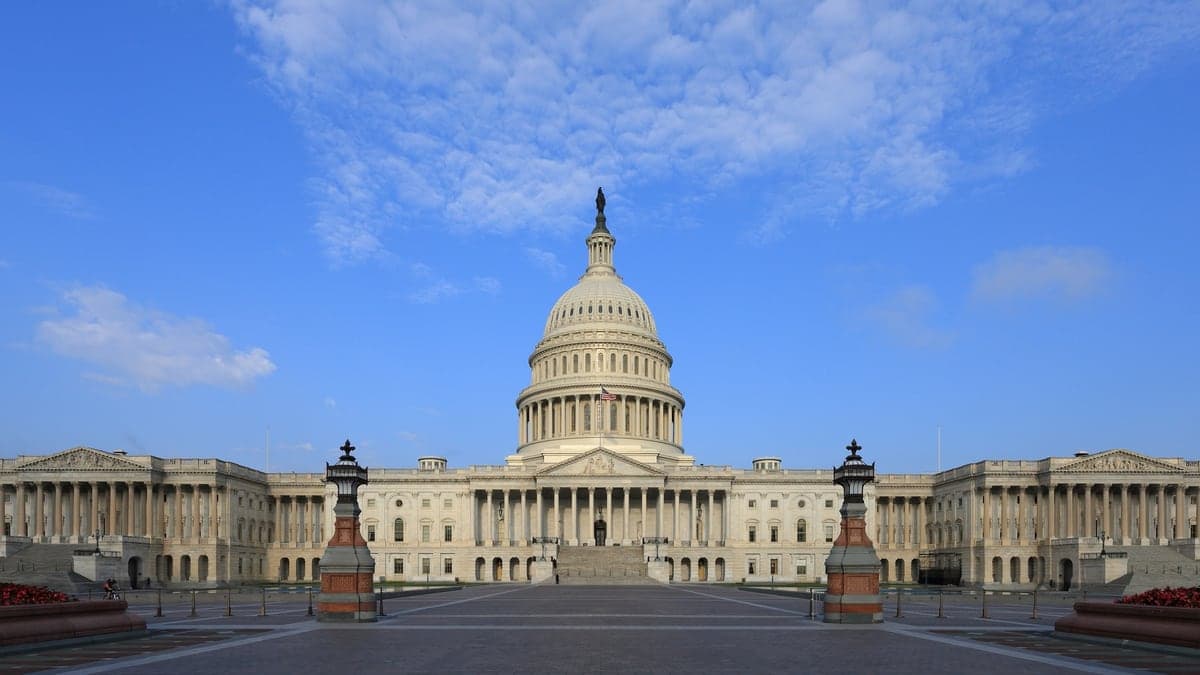
Federal AI regulation in the United States is back on the agenda. Democrats won majorities in both the House and the Senate in the 3 November 2026 midterms, and when the new Congress convenes in January they will control committee chairs, hearing calendars and subpoena power, with AI companies near the top of their list. What they can actually pass is a different question, because President Trump keeps his veto until January 2029.
What changes in January
The first and surest change is oversight. Democrats can now call executives to testify, demand documents and run investigations. Progressive Caucus chair Greg Casar has called for AI company chief executives to testify under oath, and Robert Garcia, the presumptive next chair of the House Oversight Committee, has warned the industry to prepare legal defences, CNBC reported.
According to an analysis by law firm Foley & Lardner, House Democratic committee leaders have already asked five frontier AI companies to report misalignment and safety incidents to Congress within 48 hours of detection. Senator Maria Cantwell, positioned to chair the Senate Commerce Committee, has set out a framework calling for safety standards developed by NIST, independent pre-release audits and mandatory incident reporting.

The federal AI regulation proposals in play
Several ideas are competing for attention:
- A federal AI regulator. Scott Wiener, the California state senator behind the SB 1047 and SB 53 safety bills who won Nancy Pelosi's San Francisco House seat, wants a strong federal regulator and backs Representative Ro Khanna's proposal to create one, MIT Technology Review reported. He also supports testing and audit requirements, whistleblower protections and a kill-switch requirement.
- Liability. Representative Lori Trahan's CLAIM Act discussion draft would let people sue developers when AI systems cause harm through conduct that would be unlawful if a person did it, without overriding state law.
- Tax. Democratic leaders have flagged AI and data-centre taxation, including rolling back bonus depreciation, as priorities, according to Foley.
- Bipartisan bills. Children's online safety and chip export controls are seen as having the best odds of becoming law.
Wiener's own campaign shows how entangled the industry already is in this debate: MIT Technology Review reported that it received more than $3 million from Public First Action, a pro-regulation group that receives substantial funding from Anthropic. Wiener rejected suggestions that this made him too close to the industry.
The next two years are less likely to produce a sweeping AI law than a steady stream of hearings, disclosures and testimony. For AI companies, that can be just as consequential.
States keep the lead
The most important practical effect may be what does not happen. With Democrats treating federal rules as a floor rather than a ceiling, Foley expects congressional preemption of state AI laws to become far less likely. Wiener told MIT Technology Review he opposes broad preemption and sees states as laboratories.
That leaves a growing state patchwork in place. California's SB 53, which Governor Gavin Newsom signed, and New York's frontier AI law are already on the books, and Illinois became the third state to pass frontier AI rules this year, Capitol News Illinois reported. Illinois Governor JB Pritzker has now urged the incoming Congress to pass federal requirements for AI risk assessment, testing and monitoring, while insisting that federal action build on state laws rather than override them. Industry groups such as the Computer and Communications Industry Association warn that diverging state rules create costly compliance for startups. For companies selling into Europe too, the EU AI Act compliance timeline adds another layer.
Markets and the data-centre backlash
Investors reacted fast. On 5 November, two days after the vote, Nvidia fell 9.3%, AMD 17.3% and Micron 17.5%, CNBC reported, as analysts weighed what tougher oversight would mean for a planned wave of new data centres. Local measures restricting data-centre construction were also on ballots in ten states, reflecting the growing fight over AI's energy use. Barclays strategists argued the pushback would make the buildout more expensive rather than stop it.
The timing collides with the industry's biggest moments: Anthropic's planned listing and Nvidia's leadership upheaval, which will bring its former chief executive before congressional committees. Our coverage of the Nvidia CEO resignation explains why those hearings could revisit chip exports to China.
What to watch
- Committee assignments in January, especially whether Democrats create a select committee on AI.
- The first oversight hearings with frontier lab executives, and whether incident-reporting requests become formal demands.
- A Senate safety bill built on Cantwell's framework, and whether any Republicans sign on.
- State rules taking effect on 1 January 2027, including automated decision-making rules in California and Colorado, which remain binding whatever Congress does on federal AI regulation.