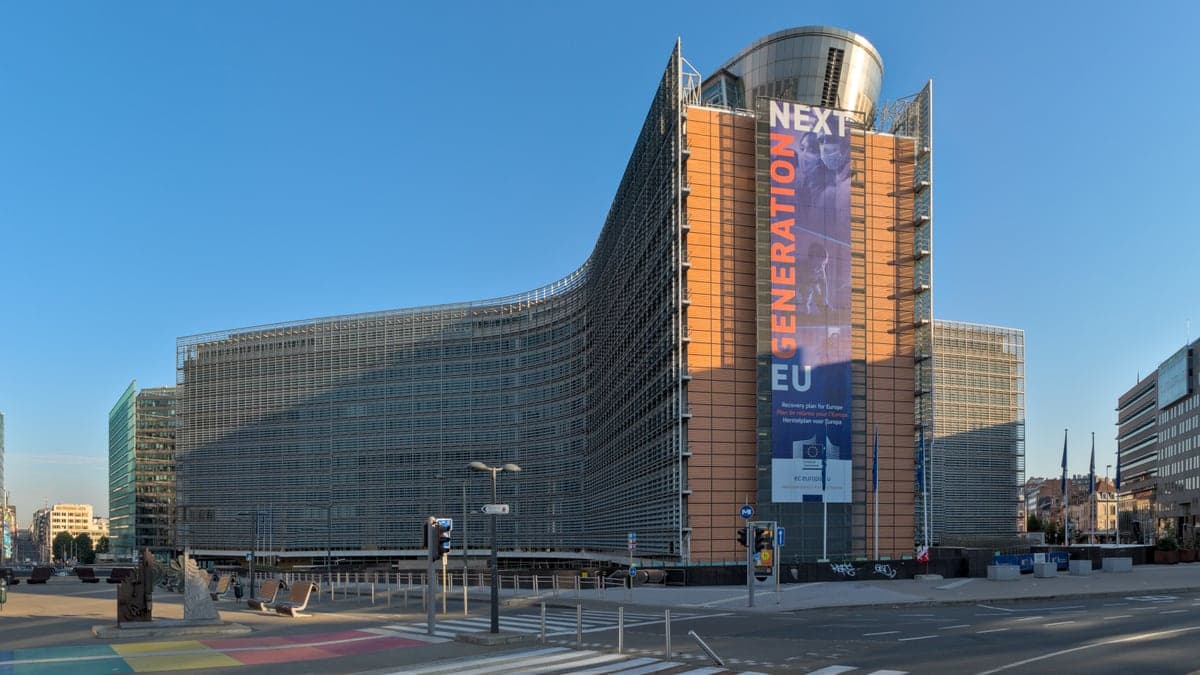
Google's €1.49 billion AdSense fine, which the EU's General Court struck down in 2024, should not have been annulled, according to a non-binding opinion delivered on 12 November 2026 by Advocate General Juliane Kokott of the Court of Justice of the European Union. She advised the court to set aside that judgment and send the case back for a new ruling. If the judges follow her, the Google AdSense fine would be revived in principle, though likely at a lower amount.
The Google AdSense fine, from 2019 to now
The case concerns AdSense for Search, the service through which Google placed search adverts on third-party websites. In March 2019 the European Commission fined Google €1,494,459,000, finding that its contracts with large publishers abused a dominant position in online search advertising intermediation between 2006 and 2016.
Three types of clause were at issue:
- Exclusivity, which stopped publishers from showing rival search ads.
- Premium placement, which reserved the most visible slots for Google's ads.
- Prior authorisation, which required Google's approval before publishers changed how competing ads were displayed.
In September 2024 the General Court annulled the decision. It accepted much of the Commission's analysis but found that the Commission had not properly shown that the contracts' duration produced the exclusionary effects it claimed. According to The Next Web, it was the only one of the Commission's six antitrust penalties against Google to be overturned by a court. The Commission appealed to the Court of Justice, in a case registered as C-826/24 P, and a hearing took place in July 2026.
What Advocate General Kokott said
Kokott's central point is that the General Court demanded too much. In her view, the lower court had already accepted that the clauses could shut out rivals, but then annulled the decision on the narrow question of how long the contracts ran, insisting on a contract-by-contract analysis. She argued that a cumulative assessment of all the contracts that mattered for competition, which is what the Commission did, was enough.
According to PPC Land's reading of the opinion, she also rejected Google's argument that short contract terms kept demand open to competitors, saying the record on market power, coverage and network effects outweighed it. And she found the General Court's reasoning contradictory: it confirmed the effects, then questioned them on duration alone.
Advocate General opinions do not decide cases, but in EU competition law they are a strong signal. When the adviser says the lower court set the bar too high, the Commission's whole enforcement toolkit is at stake.
Why the fine would be smaller
The opinion is not a full win for Brussels. Kokott proposes setting aside the 2024 judgment only for the period from 2006 to the end of 2015. The General Court's finding that the Commission had not shown exclusionary effects in 2016 was not appealed, so it stands. As Tech Times reported, she said the fine should therefore be reduced, though neither she nor the court gave a figure.
She also argued that the Court of Justice should not set the new amount itself. The General Court, which has unlimited jurisdiction over fines, never ruled on Google's challenges to how the penalty was calculated and whether it was proportionate. Those arguments would have to be heard first.
What happens next
The Court of Justice's judges have begun deliberating and have not set a date for judgment. They usually, but not always, follow the Advocate General. If they do, the timeline looks like this:
- Court of Justice judgment, which Reuters, cited by Tech Times, expects next year.
- Referral back to the General Court on Google's remaining pleas and the size of the fine.
- A new fine decision, below the original €1.49bn.
The opinion fits a pattern. In June 2025, Kokott advised the same court to dismiss Google's appeal against its €4.1bn Android fine, as The Star reported. In September 2024 the Court of Justice upheld the €2.42bn Google Shopping fine.
The bigger significance lies beyond this one case. A ruling that agrees with Kokott would make it easier for the Commission to prove that exclusive contracts harm competition without picking apart every agreement, which matters as Brussels shifts toward newer tools such as the Digital Markets Act and the Digital Services Act. Those tools are already in heavy use: the same week, the Commission said TikTok's For You feed breaches the DSA. For Google, the Google AdSense fine is a reminder that cases it thought it had won can come back years later. For the rest of Big Tech, from Brussels to London, where the CMA is weighing strategic market status for Microsoft's business software, it is a sign that competition scrutiny now runs for a very long time.