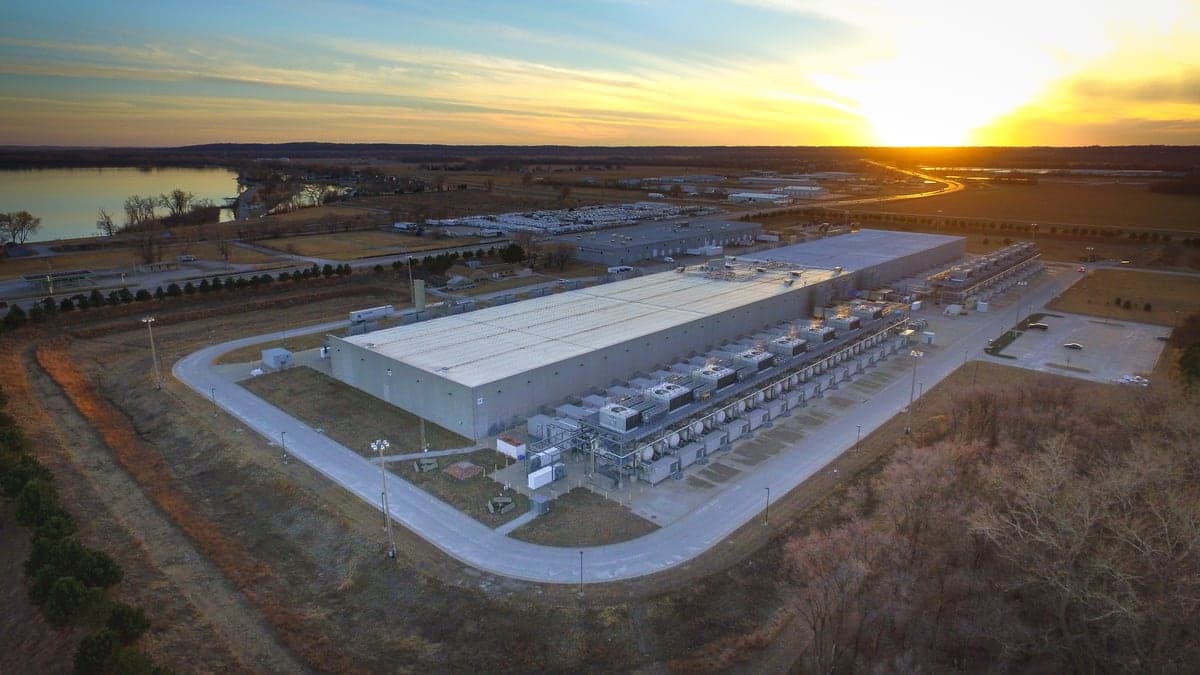
The Google Wyoming data centre is a $17 billion, long-term investment that Google announced on 5 November 2026 for a campus in Laramie County, near Cheyenne. It is the company's first data centre in the state, and it will draw part of its electricity from a planned 702-megawatt natural-gas fuel-cell plant fitted with carbon capture. Google is also promising to pay for all of the power the site consumes, a pledge aimed squarely at a growing backlash over who covers the cost of the AI build-out.
What Google is building in Wyoming
In a post on Google's official blog, Steve Walter, Google's vice-president for global infrastructure and energy, set out the partners and the power plan. The project is being developed with Tallgrass Energy, Black Hills Energy, American Electric Power (AEP) and Related Digital, with Bloom Energy supplying the fuel cells.
The main elements are:
- Fuel cells: AEP is contracted for a 702 MW fuel-cell development running on natural gas, which Google describes as the largest planned project of its kind.
- Carbon capture: captured carbon dioxide would be stored at Tallgrass's nearby Eastern Wyoming Sequestration Hub. Google says this brings its total contracted carbon capture capacity to nearly 1 gigawatt.
- Other supply: gas generation run by Tallgrass and Black Hills, with Google studying carbon capture for Tallgrass's combined-cycle turbines.
- Cooling: the facility will be air-cooled to limit pressure on local water supplies.
- Local money: Google expects the campus to generate hundreds of millions of dollars in property taxes for Laramie County and its school district, alongside grants for education and skilled trades.
Google did not put a jobs figure or an opening date in the post, describing the commitment instead as one for decades to come.
Why the Google Wyoming data centre pays its own way
The most politically important line in the announcement is the promise to pay for 100% of the power the site uses and to cover infrastructure needs driven directly by its growth. That language responds to a fast-spreading worry: that households end up subsidising grid upgrades for hyperscale facilities through higher utility bills, a dynamic we examined in our report on the AI power problem in data centres.
The timing was not subtle. Reuters reported that the announcement came in the same week as the US midterm elections, in which all but one of 41 data-centre-related local ballot measures went against the projects, according to Ballotpedia. Candidates opposed to data centre expansion also won key races in Texas and Georgia. Wyoming, by contrast, is a state where Donald Trump won more than 70% of the vote in 2024 and where energy production is a mainstay of the economy.
The data centre fight has moved from planning committees to the ballot box. Google's answer is to bring its own power and pick a state that wants the business.
Gas, carbon capture and the climate question
Choosing natural-gas fuel cells is a pragmatic move. Fuel cells can be installed faster than new grid-scale power plants and transmission lines, and siting them next to the load avoids long waits for grid connections. But they still burn fossil fuel. The climate case depends heavily on the carbon capture and storage working at scale, a technology with a mixed record in practice.
That leaves Google, which has long marketed its clean-energy purchasing, defending a campus anchored by gas. Expect environmental groups to press on how much of the site's emissions will actually be captured and how that will be verified.
Investors were not enthusiastic either. Reuters noted that Bloom Energy shares fell more than 14% as markets weighed the risk that local restrictions could slow the wider industry. In the same report, Reuters said Microsoft had declined to expand a Texas data centre agreement with AI cloud provider Nscale, another sign that the big buyers are becoming choosier about where and with whom they build.
What to watch next
The Wyoming project is a template that other hyperscalers may copy, and one that regulators will test. Watch for:
- Utility filings: how the "pay 100%" promise is written into tariffs and contracts with Black Hills and AEP.
- Carbon capture performance: permits and monitoring for the sequestration hub.
- Copycat deals: whether Microsoft, Amazon and Meta respond to the ballot-box backlash with similar self-funded power packages in energy-producing states.
- Supply chain: the AI build-out depends on more than power. Networking is the next bottleneck, which is why Marvell's $115bn bet on Lumentum targets optical links.
For the wider cloud industry, the lesson is clear. Building AI capacity is no longer only a question of capital, chips and land. It is now a question of local consent, and the Google Wyoming data centre shows the price of buying it.