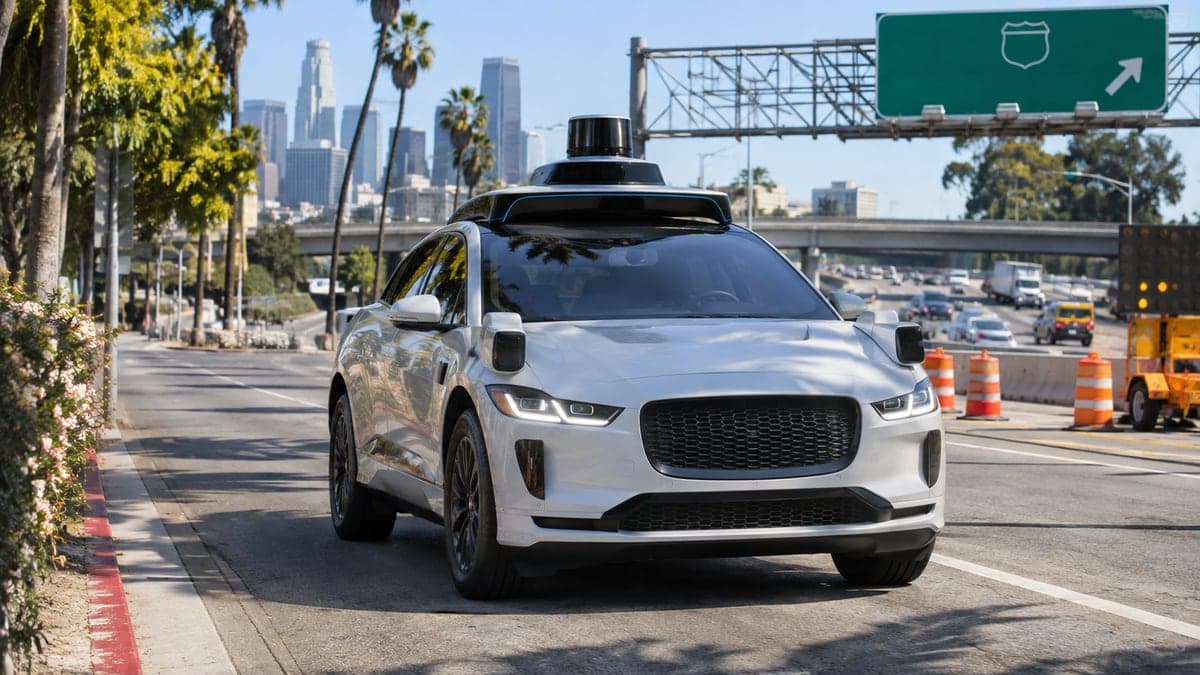
California's Department of Motor Vehicles barred Waymo's driverless robotaxis from state freeways on 11 November, declaring an imminent hazard, and the company has since applied the waymo freeway ban across its US markets.
The decision matters because freeway access underpins Waymo's commercial expansion in large metropolitan areas, linking riders to airports and cutting journey times. It also shows a state regulator using an imminent-hazard finding to curb a live commercial service rather than waiting for a federal process to conclude.
What the California DMV ordered
The DMV, which regulates autonomous-vehicle testing and deployment in California, confirmed the restrictions to TechCrunch on Tuesday 17 November. The department said it acted after three Waymo vehicles drove into a closed construction area on US Route 101 near Burlingame, and after a second episode on Highway 280 in San Francisco that involved California Highway Patrol vehicles.
In its emailed statement to TechCrunch, the DMV said its imminent-hazard finding rested on repeated entries by Waymo vehicles into construction zones where workers, vehicles and equipment were present. The department said this continued despite an earlier restriction and corrective steps taken after comparable incidents on 18 May 2026.
The department said the restrictions will remain until Waymo demonstrates it has taken "effective corrective actions" to address the deficiencies. California DMV spokesperson Jonathan Groveman gave the same condition in a statement to Wired, which reported that it is unclear how long the process will take.
San Francisco Business Times first reported the order, according to TechCrunch. The Verge also reported that the ban took effect on 11 November and followed two high-profile Bay Area incidents.
The incidents behind the waymo freeway ban
Groveman described two recent incidents in his statement to Wired. In one, a trio of Waymo vehicles went into a coned-off construction area on Route 101 on the San Francisco Peninsula. In the other, footage shared widely online showed a Waymo car getting in the way of Highway Patrol vehicles that were slowing traffic on a San Francisco highway so workers could clear crash debris.
Waymo spokesperson Dana Gallagher said the recent freeway construction-zone encounters on US 101 did not involve injuries or collisions. Wired reported that the earlier incidents cited by federal regulators in April and May also did not lead to collisions or injuries.
How Waymo has responded
Gallagher said Waymo has paused freeway driving in its other markets while it reviews how the vehicles perform. The company may continue testing on non-California highways with safety operators behind the wheel, according to Wired.
In her statement to TechCrunch, Gallagher said safety underpins all of Waymo's work. She said the surface-street ride-hailing service is still running and handles more than half a million trips a week, and that Waymo is engaging with the DMV and other state officials to restore freeway access.
Surface-street services continue in the 15 metropolitan areas where Waymo operates commercially, among them parts of Los Angeles, San Diego and the Bay Area, according to Wired. TechCrunch reported that Waymo is blocking freeway access for its robotaxis in every market, not just California.
Why freeways matter to Waymo's expansion
Waymo began offering freeway rides in late 2025, a commercial milestone central to its expansion in major metropolitan areas, according to TechCrunch. Using freeways makes airport journeys and other longer trips quicker because the cars can avoid slower local roads.
That has been particularly valuable in the Bay Area, where Waymo's service area runs from the city south to Silicon Valley. TechCrunch reported that freeway access cut some cross-Peninsula journeys that had taken 45 minutes, and in some cases over an hour.
The waymo freeway ban therefore removes a feature that made longer cross-bay journeys more competitive, even though the core surface-street service remains available. For riders, the immediate effect is longer routes on affected trips; for Waymo, it complicates the case for airport and regional connections.
A pattern of construction-zone problems
This is the second time Waymo has publicly restricted freeway operations since beginning passenger freeway rides last year, according to Wired. In May, the company abruptly stopped operating on highways without citing a specific reason at the time, while videos posted on social media appeared to show its cars passing through cones and having difficulty in construction areas, TechCrunch reported.
Waymo returned to freeways in July after saying it had updated its self-driving software to improve performance around freeway construction zones. In June, the company recalled its software after federal regulators found the system failed to recognise highway construction zones, according to Wired.
The National Highway Traffic Safety Administration pointed to several April and May episodes in which Waymo vehicles ignored signs closing ramps and proceeded into lanes that had been shut for works. Wired also reported that the agency said it was examining whether a separate Waymo recall software fix, issued in December 2025 over vehicles repeatedly driving past stopped school buses with lights on or stop arms extended, had solved the safety issues.
Construction zones have challenged self-driving cars for at least a decade, according to Wired. Their layouts vary, and while human drivers can interpret bollards, placards and blinking arrows, the absence of fixed rules has proved difficult to program reliably, with the risk heightened at freeway speeds where workers are close to fast-moving traffic.
What this signals for autonomous-vehicle regulation
The waymo freeway ban is a state-level operational restriction applied to a commercial service already carrying passengers, rather than a limit on a testing permit. The DMV's statement that prior restrictions and corrective actions failed to prevent recurring incursions indicates that repeated deficiencies can trigger a broader curb.
That suggests regulators may be willing to narrow a deployment by road type while leaving the rest of the service running, a targeted approach that preserves surface-street operations but removes higher-speed driving. The split between California's order, Waymo's voluntary nationwide restriction and NHTSA's separate recall oversight also shows that state and federal processes can run in parallel.
The wider regulatory context is already contentious, as seen in California's lawsuit against OpenAI over alleged rogue AI agent attacks and the debate over federal AI regulation under a Democratic Congress. For autonomous vehicles, the immediate test is narrower: whether Waymo can satisfy the DMV that its corrective actions work in active construction zones.
What happens next
Waymo says it is working with the California DMV and other state officials to resume freeway operations, and the restriction will lift only when the department accepts that effective corrective actions are in place. No timeline has been given, and Wired reported that the duration is unclear.
Readers and industry watchers should look for any DMV description of the evidence required, further NHTSA findings on the June recall and the December 2025 school-bus recall fix, and whether Waymo reinstates freeway service outside California before the state order is resolved. Until then, the company's robotaxis remain off freeways in all of its commercial markets.