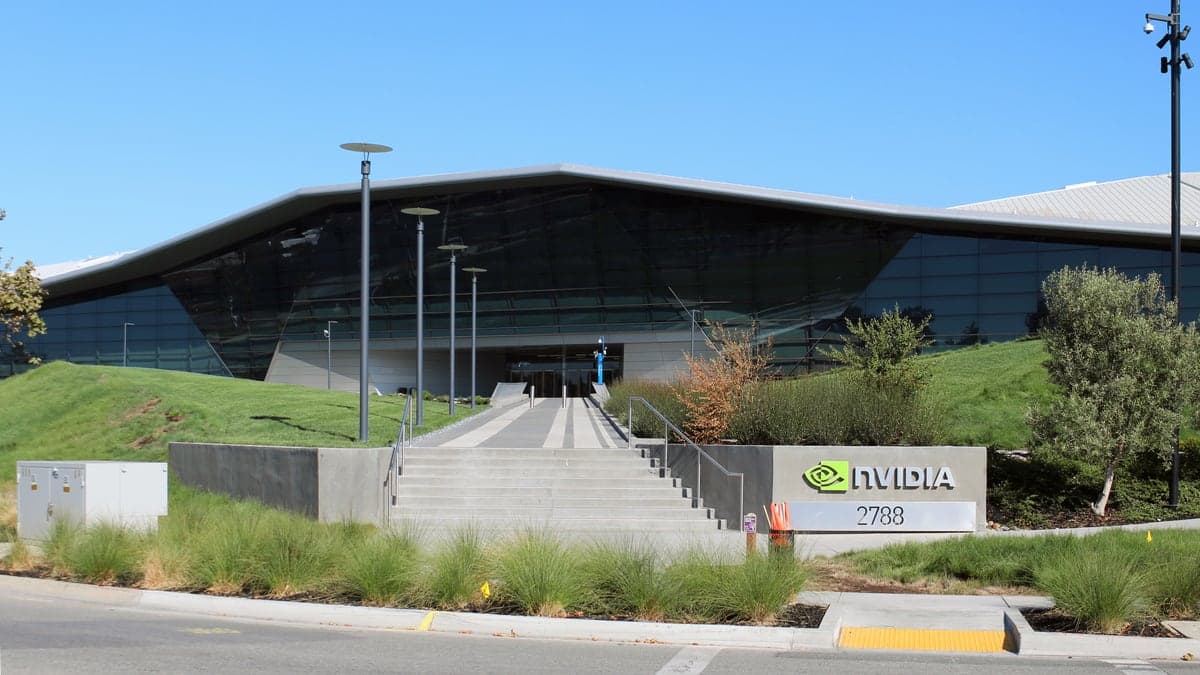
The Nvidia CEO resignation is the biggest leadership shock the AI industry has faced. Jensen Huang, who co-founded Nvidia and led it for 33 years, stepped down as president, chief executive and director with immediate effect on 12 November 2026, and chief financial officer Colette Kress is running the company on an interim basis while the board searches for a permanent successor.
What Nvidia announced
The company's announcement, filed with the SEC, is short and gives no reason for the departure. Its key points:
- Huang resigned as president, CEO and board member, effective immediately.
- Kress, Nvidia's CFO since September 2013, becomes interim CEO while keeping the finance role.
- Harvey C. Jones, a long-serving board member and former chief executive and executive chairman of Synopsys, becomes the company's first-ever board chair.
- The board will consider internal and external candidates for the permanent job.
- Third-quarter fiscal 2027 results remain scheduled for Tuesday 17 November.
Jones said in the statement that the company expects operations, customer commitments and the product roadmap to continue without interruption.
Why Huang stepped down
Nvidia has not explained the decision. Al Jazeera reported that it followed several days of scrutiny over Huang's personal relationships and possible national security questions. Days earlier, Huang had publicly apologised over his personal conduct, and the board had backed him while launching an independent investigation into reports that Chinese intelligence had targeted him. Further reports, including one about a relationship with a senior executive, followed before the resignation.
The board has said it has no reason to believe national security was compromised, and there is no public evidence that company secrets were exposed. Lawmakers want to hear for themselves. House Foreign Affairs Committee chair Brian Mast said Huang had agreed to testify before Thanksgiving, and Senate Banking Committee chair Tim Scott asked him to appear on 3 December, CNBC reported.
Market reaction to the Nvidia CEO resignation
Investors flinched, then partly recovered. Nvidia shares opened down more than 13% on 12 November but closed 4.3% lower, leaving its market value just above $4 trillion, according to CNBC. The stock had already lost more than $2 trillion in value since an early-October peak, and fell 9.3% on 5 November when AI and chip stocks sold off after Democrats won control of Congress.
Several analysts cut price targets while keeping positive ratings, and Baird downgraded the stock to neutral. KeyBanc described the departure as a material increase in strategic, organisational and execution risk.
Nvidia's chips do not depend on one person. Its political relationships, its China strategy and its pace of decision-making may depend on him far more than investors had priced in.
What it means for the AI chip race
Nvidia controls an estimated 90% of the market for advanced AI chips, according to Al Jazeera. Nearly every major AI lab, cloud provider and sovereign AI project relies on its accelerators, and its roadmap sets the pace for the data-centre buildout. Three questions now matter most.
Execution. Product timelines are set years in advance, and the board insists they hold. Kress oversaw Nvidia's finance function as annual revenue grew from $4.13 billion in fiscal 2014 to $215.9 billion in fiscal 2026, per Al Jazeera, and analysts credit her with deep Wall Street relationships. The harder test is engineering and customer leadership, where Huang was hands-on.
China and export controls. Huang was the industry's most effective lobbyist against chip export restrictions. Al Jazeera notes that the US approved H200 sales to China in December 2025 under conditions including a 25% tariff. With the national security questions around his departure and a Democratic Congress arriving in January, looser export rules now look harder to win, a point we explore in our analysis of federal AI regulation under a Democratic Congress.
Customers and partners. Nvidia is a strategic investor across the AI ecosystem, including the $26 billion private placement accompanying the Anthropic IPO. A distracted Nvidia leaves an opening for rival accelerators and in-house chips from cloud providers, and adds uncertainty to a buildout already strained by the power demands of AI data centres.
What to watch next
- 17 November earnings: results and guidance, delivered for the first time without Huang, will show whether demand is intact.
- The successor search: analysts have floated internal technical leaders as candidates, but the board has named no shortlist.
- Congressional testimony: hearings could revisit Nvidia's China sales and the scope of the internal investigation.
- Customer signals: any delays in orders or roadmap commitments from large cloud buyers would be the clearest sign the leadership vacuum is hurting the business.