What is quantum computing? It is a way of processing information using the rules of quantum physics, the physics of atoms and particles. Instead of ordinary bits, quantum computers use qubits, which let them tackle certain problems in ways normal computers can't. They won't replace your laptop, but they could matter a great deal for science and for encryption.
This guide explains the key ideas without the maths, separates real promise from hype, and sets out what it means for the security of your data.
Bits and qubits
Every normal computer, from a phone to a supercomputer, works with bits. A bit is either 0 or 1, like a switch that is off or on. Everything you do on a computer is built from huge numbers of these switches.
A quantum computer uses qubits. Qubits can be made from very different things, such as tiny superconducting circuits, trapped atoms or particles of light. What they share are three quantum effects:
- Superposition. A qubit can be in a blend of 0 and 1 at the same time. A common analogy is a spinning coin, which is neither heads nor tails until it lands. When you measure a qubit, you get a single 0 or 1.
- Entanglement. Qubits can be linked so that their results are connected, however far apart they are. Measuring one tells you something about the others.
- Interference. Quantum algorithms are designed so that the paths leading to wrong answers cancel each other out, while the paths leading to right answers reinforce each other. This is where the real power comes from.
A popular myth is that a quantum computer "tries every answer at once". That isn't quite right. The skill lies in designing algorithms that use interference to make the right answer the most likely result when you measure.
A quantum computer isn't a faster laptop. It is a different kind of machine, and it only shines on problems shaped the right way.
What quantum computers could do
Researchers expect useful advantages in a limited set of problems:
- Simulating nature. Molecules and materials follow quantum rules, so quantum computers could model them more naturally. That could help with chemistry, drug research, batteries and new materials.
- Certain mathematical problems, including factoring very large numbers, which matters for encryption.
- Some optimisation and search problems, although how big the real-world gains will be is still debated.
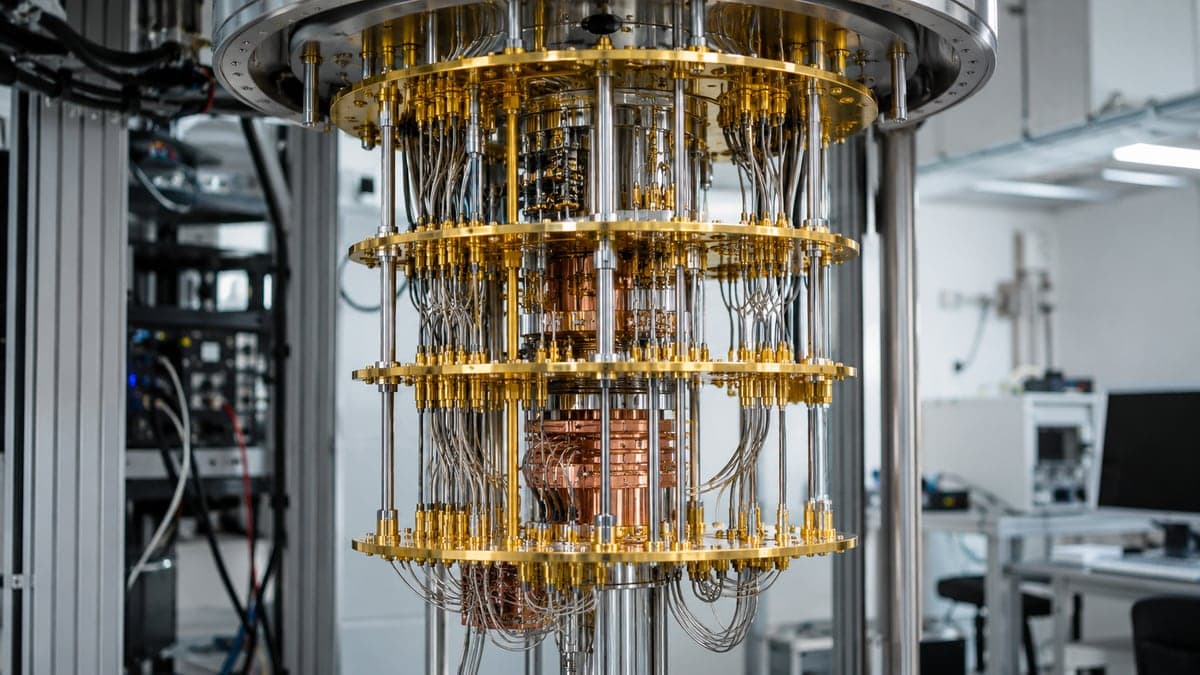
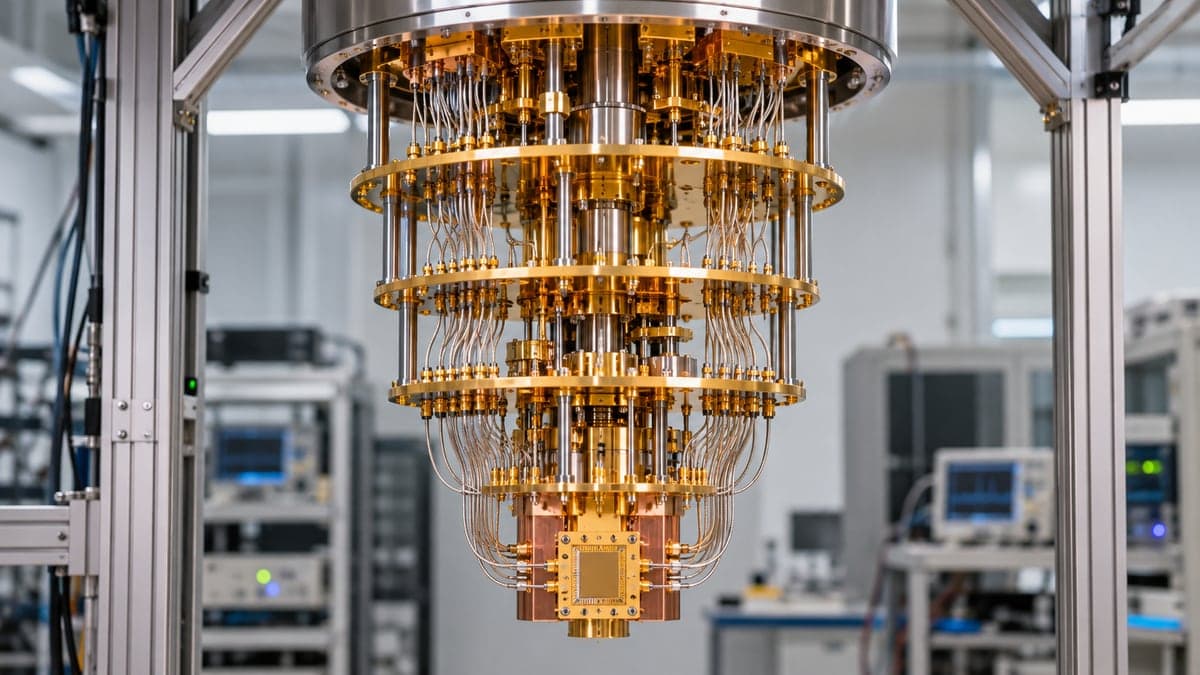
IBM's introduction to quantum computing is a good next step if you want more detail, and our report on IBM Quantum System Two in Chicago shows what today's hardware looks like.
What quantum computers can't do
- They won't run your email, games or spreadsheets faster. For everyday tasks, classical computers remain better and far cheaper.
- They aren't ready for most real work yet. Qubits are fragile. Heat, vibration and stray signals cause errors, and many machines need cooling to temperatures colder than outer space.
- They need error correction to scale. Building machines with enough reliable, error-corrected qubits for the most ambitious tasks is the central challenge, and timelines are uncertain.
- They won't sit on your desk. Most people and businesses who use them do so through cloud services.
Be sceptical of headlines claiming a quantum computer has "solved" a big real-world problem. Ask whether the task was useful, and whether a classical computer could have done it too.
Why quantum computing matters for encryption
This is the part that affects everyone. Much of the internet's security relies on public-key encryption such as RSA and elliptic-curve cryptography. It protects website connections, software updates, banking and messaging.
These methods rely on maths problems that are extremely hard for classical computers. In 1994, the mathematician Peter Shor showed that a sufficiently large quantum computer could solve them efficiently. No machine that big exists today, but the risk is taken seriously for two reasons:
- Harvest now, decrypt later. Attackers can record encrypted data today and store it until a capable quantum computer exists. Data that must stay secret for many years is already at risk.
- Migration takes years. Replacing encryption across every system, device and supplier is slow work.
Symmetric encryption, such as the AES used to encrypt files and disks, is much less affected. Using longer keys is generally considered enough.
What is being done about it
In August 2024, the US National Institute of Standards and Technology published its first three post-quantum encryption standards, known as FIPS 203, 204 and 205. These use maths problems believed to be hard even for quantum computers. The UK NCSC has set migration timelines for organisations, with a target of completing migration by 2035.
Browsers, operating systems and cloud providers are already adding these algorithms, often without users noticing. Our deeper explainer on post-quantum cryptography migration covers the details for IT teams.
What you should do now
For individuals, the answer is simple: keep your devices, browsers and apps updated, because post-quantum protection mostly arrives through normal updates.
For small businesses:
- Keep software and devices current, and replace hardware that no longer gets security updates.
- List the data that must stay confidential for years, such as contracts, health or financial records.
- Ask key suppliers about their post-quantum plans, especially for VPNs, cloud services and payment systems.
- Avoid panic purchases. Be wary of products marketed as "quantum-proof" without reference to the NIST standards.
Quick recap
So, what is quantum computing in one line? A new kind of machine that uses quantum physics to solve a narrow set of problems, with big consequences for encryption.
- Qubits use superposition, entanglement and interference.
- Quantum computers help with specific problems, not everything.
- Large, error-corrected machines don't exist yet.
- Today's public-key encryption will need replacing, and the work has already started.
- Staying updated is the most useful thing most people can do.