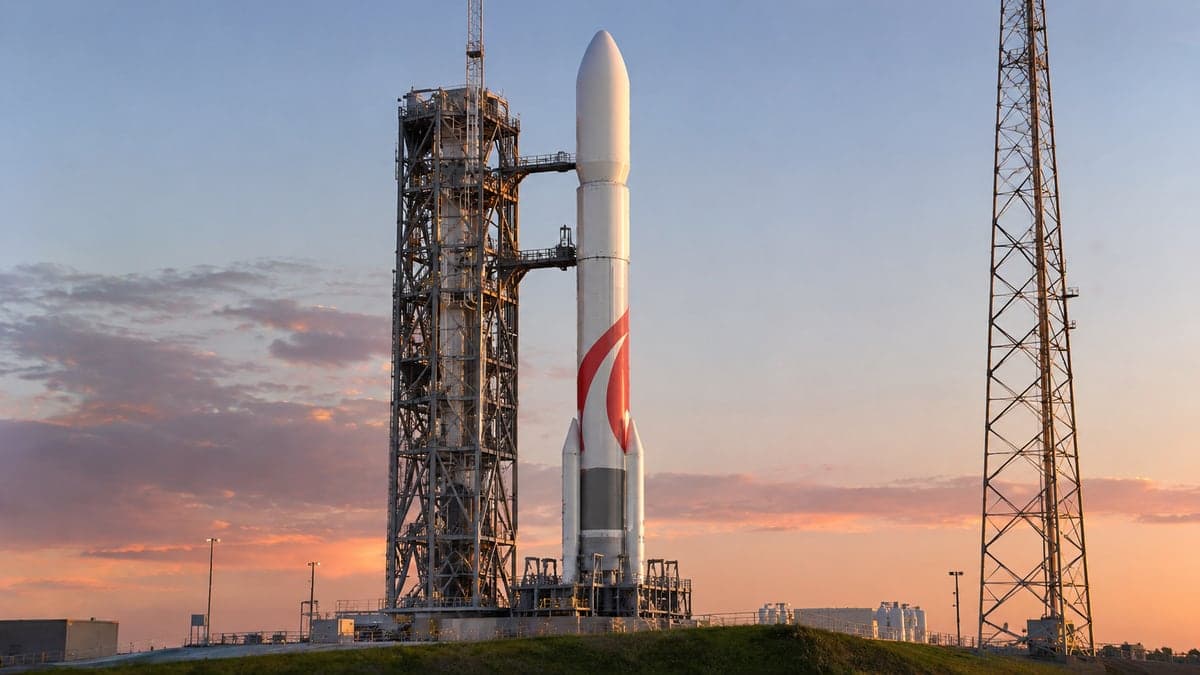
United Launch Alliance said on Tuesday 17 November that early data points to underperformance in Vulcan’s first stage just after liftoff. The rocket could not place 40 Amazon Leo satellites into orbit, according to a GeekWire report.
The loss is a setback for Amazon’s satellite deployment programme and puts the reliability of a major launch vehicle under examination. For customers and mission planners, the immediate concern is not only the failed flight but whether investigators identify a problem that could affect later launches.
What the preliminary failure findings show
ULA’s initial assessment concerns the first stage’s performance in the opening phase of the flight. According to GeekWire, the company said early data suggests the stage underperformed just after liftoff, leaving Vulcan unable to deliver its payload to orbit.
That assessment does not establish a root cause. ULA did not say what produced the underperformance, and it did not say whether the first stage’s Blue Origin BE-4 engines played a role.
The distinction matters because a performance observation is not the same as a completed failure analysis. Investigators still need to determine which hardware, software or operational factors explain the data, but the available source material does not describe that work or provide a timetable.
What happened to the Amazon Leo satellites
The payload comprised 40 Amazon Leo satellites. GeekWire reported that the launch failure cost Amazon those spacecraft after Vulcan could not put them into orbit.
The source material does not provide a satellite-by-satellite status, an altitude reached by the vehicle or details of any recovery effort. It also does not give a financial value for the loss. Those points should not be inferred from the preliminary finding.
The confirmed operational result is narrower: the intended orbital delivery did not happen, and all 40 satellites were lost in the failure, according to the report. Neither Amazon’s response nor a detailed payload statement is included in the supplied material.
Why the engine question remains open
The BE-4 engines are relevant because they belong to the first-stage propulsion system identified in the preliminary account. However, ULA’s silence on their role means there is no confirmed basis to attribute the failure to Blue Origin or to a specific engine component.
A first-stage underperformance finding can focus attention on propulsion without proving that propulsion caused the problem. The available reporting does not supply telemetry, inspection results or engineering conclusions that would narrow the investigation further.
That leaves several essential questions unanswered. Investigators have not publicly established whether the observed performance began with the engines, another first-stage system or a different factor. Any firmer explanation would need to come from subsequent findings by ULA or another authoritative source.
What the investigation could mean for upcoming launches
The investigation could affect upcoming launches if it leads to corrective work, additional checks or changes to launch procedures. The supplied source material does not announce a launch pause, name delayed missions or provide a revised manifest, so none of those outcomes should be treated as confirmed.
For Amazon, the practical issue is how and when the lost capacity can be replaced. For ULA and its customers, the issue is whether the preliminary first-stage finding has implications beyond this flight. The present evidence does not answer either question.
The next meaningful indicators will be a root-cause finding, any required corrective actions and updated launch dates. Until then, the preliminary assessment supports scrutiny of the schedule, but not a conclusion that particular missions will slip.
What readers should watch next
Readers following the programme should separate three stages of information: the observed underperformance, the eventual explanation and the operational response. Only the first is described in the available report.
DailyTech.press has separately covered other orbital and servicing developments, including SpaceX’s Starship upper-stage catch and commercial proposals for Hubble servicing. Those stories provide broader industry context but do not establish anything about Vulcan’s failure.
For this investigation, the key test will be whether ULA publishes evidence linking the early data to a specific mechanism. A subsequent schedule update would then show how that finding affects Amazon Leo deployments and other customers waiting for Vulcan missions.