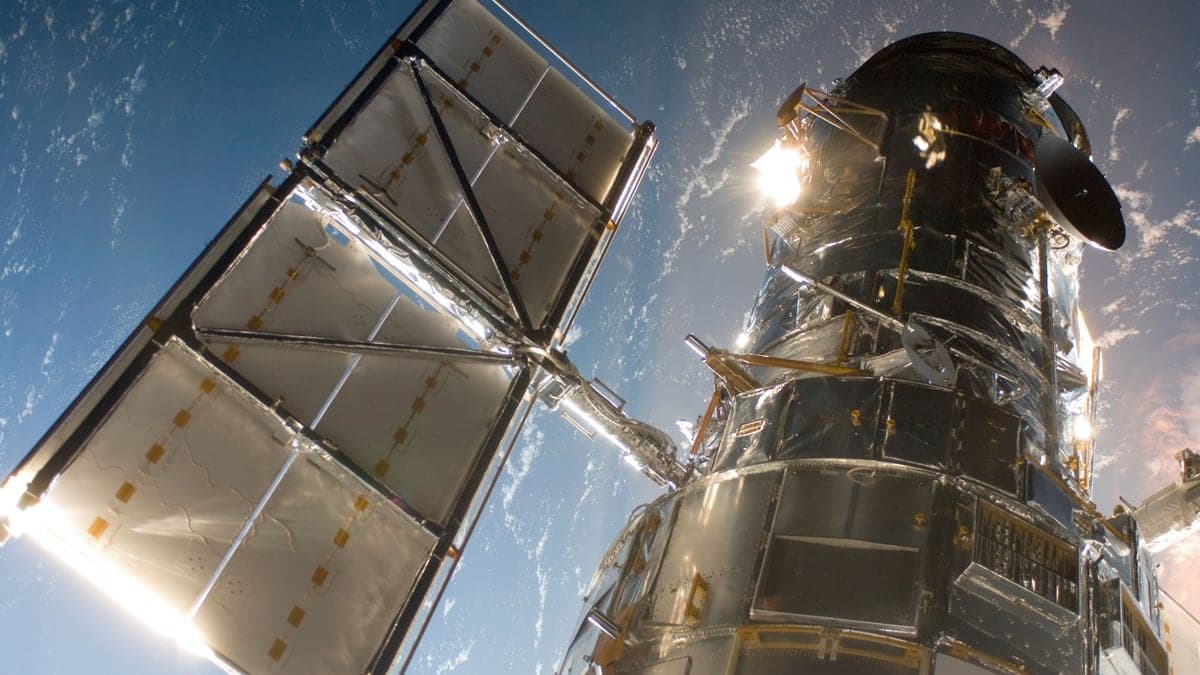
A Hubble reboost is back on NASA's agenda. On 29 October 2026 the agency issued a request for information asking companies how they could raise the telescope to a higher orbit, service it to extend its capabilities, or guide it to a safe, controlled reentry at the end of its life. Responses are due by 3 p.m. EST on Monday 30 November.
It is not a rescue mission yet. A request for information is a market survey, not a contract. But it signals that NASA's leadership wants a serious look at keeping its most famous observatory working, and it puts the young commercial in-space servicing industry on the spot.
Why Hubble needs a reboost at all
Hubble orbits low enough to feel the faint drag of Earth's upper atmosphere, and it has no propulsion system of its own. Over time that drag pulls it lower. The space shuttle used to fix the problem on each servicing visit, but the shuttles retired after the last Hubble mission in 2009.
NASA's current analysis predicts that Hubble is likely to reenter the atmosphere in 2033 or 2034. To change that outcome, NASA says a mission would need to launch by 2032. That leaves a narrow window to design, fund, build and fly something capable of safely approaching a large, delicate telescope that was never designed to be grabbed by a commercial spacecraft.
There is one helpful piece of foresight. During Servicing Mission 4 in 2009, astronauts on Atlantis attached a device to the base of the telescope to make a future de-orbit easier. Hardware like that gives a visiting spacecraft something designed to be grabbed, which helps make both a controlled reentry and, potentially, a reboost more plausible.
What NASA is asking for
The request covers three possible paths:
- Reboost: raising Hubble's orbit to buy more years of science.
- Servicing: improving the observatory's capabilities, for example by replacing ageing parts.
- Disposal: a safe, controlled reentry or other end-of-life option, instead of an uncontrolled fall.
NASA Administrator Jared Isaacman said that "Hubble still has important science ahead of it." Nicky Fox, who leads NASA's Science Mission Directorate, said the agency is "eager to explore the breadth of possibilities."
The question is no longer whether a private spacecraft can reach Hubble. It is whether one can touch it without doing more harm than good.
Why this has been tried before
This is NASA's second public attempt. In 2022, NASA and SpaceX signed an unfunded agreement to study whether a Crew Dragon could boost the telescope, an idea backed by Isaacman's Polaris Program before he joined NASA. At the time, Scientific American reported on the debate among former Hubble astronauts and engineers, who warned that a docking that was too forceful could damage fragile parts such as the solar arrays. NASA ultimately did not proceed with a reboost.
The telescope has also aged since then. In 2024, after persistent problems with one of its gyroscopes, NASA switched Hubble to a one-gyro pointing mode, keeping another gyro in reserve. NASA said most observations were unaffected, but it is a reminder that any servicing plan has to weigh the value of extra years against the condition of the hardware.
What happens next
After 30 November, NASA will review the responses. Nothing obliges it to buy a mission: the notice is explicitly a request for information, not a solicitation. If the agency pursues a Hubble reboost or a disposal mission, the likely next steps would be concept studies, cost estimates and a decision about whether the science return justifies the risk and expense against NASA's other science priorities.
The outcome matters beyond astronomy. In-space servicing, refuelling and active debris removal are frequently promoted as the next big commercial space market. A credible Hubble mission would be a flagship demonstration. A pass from industry, or a plan judged too risky, would suggest the sector is still some way from handling high-value assets.
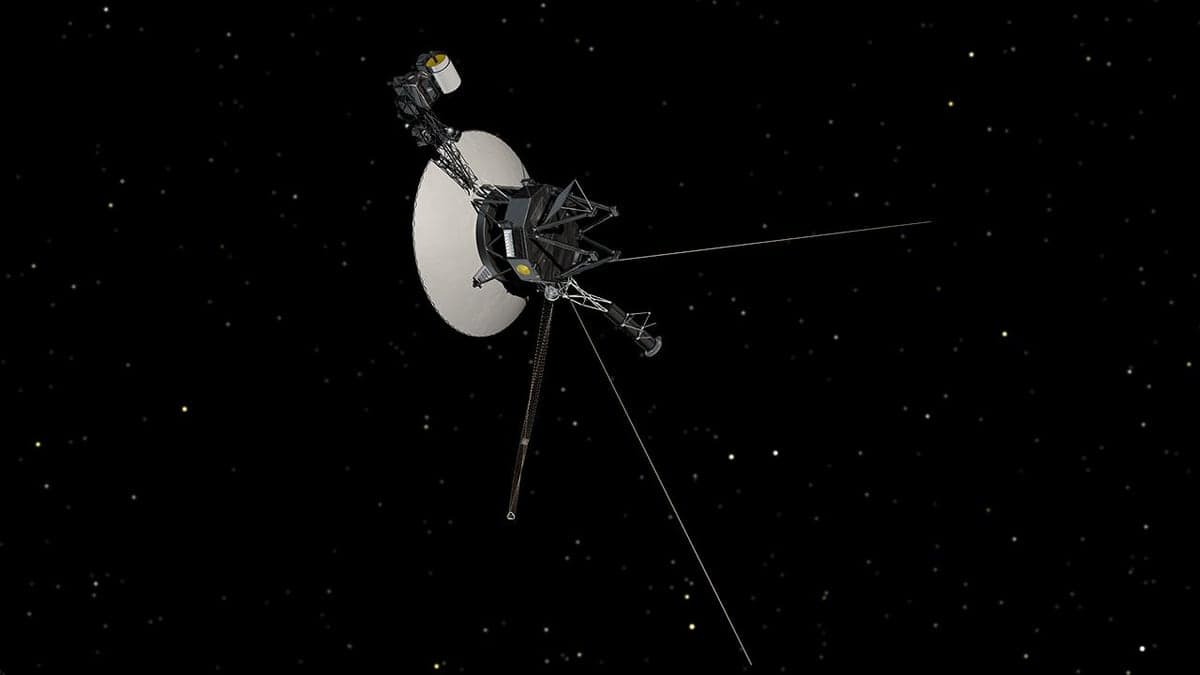
Commercial launch capability is moving fast, as SpaceX showed this week when it caught a Starship upper stage returning from orbit. Whether that translates into delicate, close-quarters work around a 36-year-old telescope is a different question. Meanwhile, the long-lived Voyager 1 is about to reach one light-day from Earth, proof that old spacecraft can keep delivering when engineers manage them carefully. Close-quarters robotic work of this kind leans heavily on onboard autonomy, a trend we explored in the next AI leap in autonomous systems and the rise of AI drones.