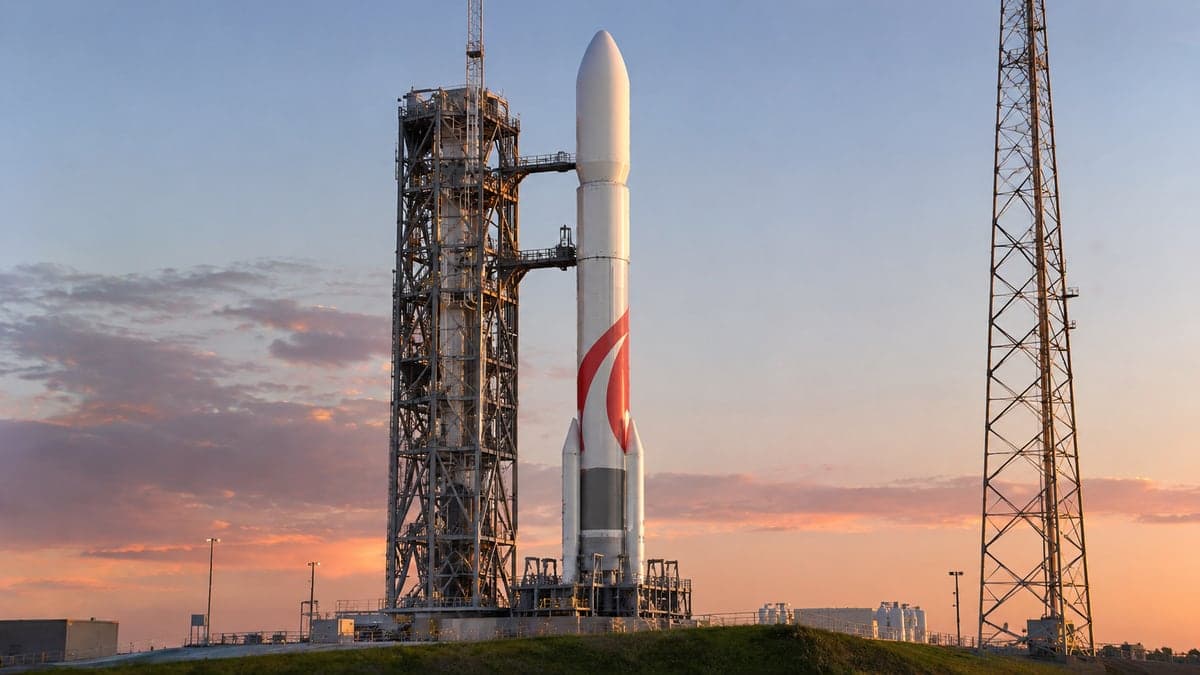
Starship Flight 15 delivered one historic first and one setback. On Saturday 14 November 2026, the launch tower at SpaceX's Starbase site in Texas caught a Starship upper stage returning from orbit, something no one had done before. The giant Super Heavy booster that launched it the previous evening, however, called off its own catch attempt and was lost offshore.
That split result matters because SpaceX's entire business case for Starship rests on reusing both stages quickly and cheaply. One half of that puzzle has now been shown to work at least once.
What happened on Starship Flight 15
The vehicle lifted off from Starbase at 4:47 p.m. local time on Friday 13 November, according to Spaceflight Now's live coverage. The stack paired Booster 22, one of the newer Version 3 Super Heavy boosters, with Ship 42. SpaceX had billed the mission as its most ambitious test so far: the plan was to recover both stages with the tower's mechanical "chopsticks" arms on the same flight.
The booster separated as planned but did not come home. Roughly six and a half minutes after liftoff it was steered to a contingency splashdown zone in the Gulf of Mexico and exploded before reaching the water. SpaceX had caught earlier boosters on three previous flights, but no Version 3 Super Heavy has yet returned to the tower.
The upper stage had a much better day. Ship 42 reached orbit, released 26 of the company's larger Starlink V3 satellites, and then coasted for around 22.5 hours and 14 orbits before firing its engines to come home. CNBC reported that the ship was captured by the tower arms after its return from orbit on Saturday afternoon, the first time SpaceX has caught a Starship spacecraft rather than a booster.
Why the booster aborted is still unclear
The cause of the booster abort is not yet settled in public. During the webcast, SpaceX's hosts first suggested that the guidance system had judged the booster was not where it needed to be for a catch and triggered an automatic abort. Later in the mission, commentator Dan Huot walked that back, telling viewers: "It was not a GNC issue that caused us not to come back." Other reports, including Interesting Engineering's account, point to a low-fuel warning during the return.
Whatever the trigger, the abort logic did its job. Catch attempts are designed to divert away from the pad if conditions are not met, because a booster hitting the tower would cost far more than a booster lost at sea.
A single caught ship proves the choreography can work. It does not yet prove the rocket can be flown again next week.
Why catching the ship is the bigger milestone
SpaceX has already caught boosters on three earlier flights. The upper stage is the harder problem. It has to survive orbital reentry at roughly 17,000 mph behind a shield of black hexagonal heat tiles, then relight its engines and slow precisely enough for the tower to grab it. Interesting Engineering notes that the heat shield still needs work before ships can be reused with minimal refurbishment.
Recovering intact ships changes the economics. Every previous Starship upper stage was expended or destroyed. A ship that comes back to the pad can be inspected, refurbished and, eventually, refuelled and relaunched. That is the core of SpaceX's pitch for Starship as a low-cost workhorse, and it is the same logic that made the reusable Falcon 9 first stage so disruptive.
There is also a very practical customer: Starlink. CNBC notes that Starlink is SpaceX's profit centre and that a single Starship can carry up to 60 V3 satellites, many more than a Falcon 9. Faster, cheaper Starship flights mean faster constellation build-out, which in turn feeds the growing debate about how much energy and infrastructure the digital economy needs.
What comes next for Starship
Several questions remain before anyone can call Starship operational:
- A true double catch. SpaceX still has to recover both stages on the same flight, and Interesting Engineering expects another attempt on an upcoming mission.
- Version 3 booster returns. The newer boosters with Raptor 3 engines have not yet completed a tower catch.
- Rapid reuse. Catching hardware is only valuable if it can fly again without months of rework, especially the heat shield.
- NASA's Moon plans. NASA expects Starship to play a role in carrying astronauts between lunar orbit and the surface under its Artemis programme, so every step towards a reliable, reusable ship feeds directly into lunar timelines.
For now, Flight 15 is best read as a partial success with an outsized first. The caught ship gives engineers something they have never had before: a Starship upper stage that has been to orbit and back, ready to be taken apart and studied. That data, more than the spectacle, is what will decide how quickly the next flights come.
For a broader look at the technologies reshaping industry, see our analysis of the next leap in autonomous systems, and our coverage of NASA's ESCAPADE twins heading for Mars, which launched on a different reusable-rocket bet.